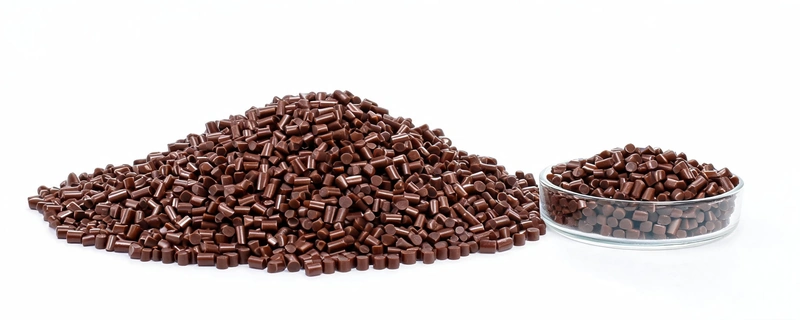
PAI granules are a granular form of polyamide-imide material intended for specific industrial processing routes. Depending on the product grade and manufacturing technology, granular PAI materials may be considered for specialized forming, molding or material development applications.
1. What Are PAI Granules?
PAI stands for Polyamide-imide, a high-performance polymer family combining amide and imide structures in its molecular backbone. PAI is valued in demanding engineering applications where mechanical strength, stiffness and thermal performance are important.
PAI granules are supplied in a granular form for particular processing requirements. However, the word "granules" alone does not define how the material can be processed. The exact resin chemistry, molecular structure, product formulation and manufacturing route determine its suitability.
Buyers should therefore confirm whether a product is intended for injection molding, compression-based forming, compounding or another specialized process before selecting it.
2. Main Characteristics of PAI Granules
High-Performance Polymer Chemistry
PAI belongs to the high-performance engineering polymer category. Selected grades offer a combination of mechanical strength, stiffness and thermal capability for demanding industrial environments.
Grade-Dependent Thermal Behavior
PAI materials are used in applications involving elevated temperatures. However, the processing temperature and long-term service capability are different considerations. Both must be evaluated using the technical data for the specific material.
Mechanical Performance
Depending on the grade and processing method, PAI can provide high mechanical performance. The properties of a finished component also depend on molding conditions, internal structure, geometry and post-processing.
Specialized Processing Requirements
PAI is not a standard commodity thermoplastic. Its processing route may require specialized equipment, temperature control and carefully defined manufacturing conditions. A generic plastic molding setup should not be assumed suitable.
3. Typical Applications of PAI Granules
Specialized Molded Components
Where a suitable grade and processing route are available, granular PAI materials may be considered for components with complex geometries or specific performance requirements. The feasibility depends on the product specification and available manufacturing process.
Precision Engineering Components
PAI is used in demanding engineering applications where strength, stiffness, wear behavior and dimensional performance are important. The suitability of a granular feedstock must be confirmed for the intended component and production method.
Electrical and Industrial Parts
Selected PAI materials may be used in electrical and industrial components requiring a combination of mechanical and thermal performance. Electrical properties and insulation requirements should be verified for the exact grade.
Specialty Material Development
Granular PAI materials may also be evaluated in specialized material development or manufacturing projects. Before production, test the material using the actual processing equipment and target component design.
4. PAI Granules and Different Processing Routes
One of the most important questions when purchasing PAI granules is how the material is designed to be processed. Different PAI products may require different manufacturing technologies.
Injection Molding
Injection molding should only be considered when the specific PAI grade is explicitly designed for this process. Buyers should confirm melt or processing characteristics, equipment requirements, mold design considerations and recommended processing conditions with the manufacturer.
Compression-Based Forming
Certain specialty polymer systems may be supplied for compression-based forming processes. The required pressure, temperature, holding time and any subsequent treatment depend on the material system. These parameters should not be generalized across all PAI products.
Compounding and Other Processes
Some granular materials may be intended for blending, compounding or further material preparation rather than direct production of finished components. Confirm the intended downstream process before selecting the feedstock.
5. Processing Considerations
Confirm Material Compatibility
Before production, check that the material is compatible with the intended equipment and processing route. Review the supplier's technical data sheet and processing guidance.
Moisture Control and Drying
Moisture control may be important for certain PAI grades and processing systems. Whether pre-drying is required, and the appropriate drying conditions, depend on the exact product. Follow the supplier's recommendations rather than using a generic drying temperature or schedule.
Temperature Management
PAI processing may involve demanding thermal conditions. Temperature control throughout material preparation, processing and cooling is important for consistent results. Excessive or unsuitable thermal exposure may affect material quality.
Equipment and Tooling
Specialized equipment may be required depending on the grade. Mold design, material feeding, temperature control and processing stability should all be considered during manufacturing evaluation.
Quality Inspection
Inspect molded or formed components for dimensional accuracy, surface defects, voids and other process-related issues. The appropriate inspection method depends on component geometry and end-use requirements.
6. PAI Granules vs. PAI Powder
PAI granules and PAI powder are different physical product forms. Although both may be used in specialized industrial applications, they should not be treated as interchangeable.
- PAI granules: Granular feedstock that may be intended for a defined molding, forming, compounding or other manufacturing route.
- PAI powder: Powdered resin or material intended for selected coating, formulation, compounding or other specialty applications.
The correct form depends on the processing equipment, formulation requirements, handling characteristics and final product design.
7. PAI Granules vs. PEEK Granules
PAI and PEEK are both high-performance engineering polymers, but their chemistry and processing characteristics differ. A direct substitution should not be made based only on temperature or strength values.
- PAI: Selected for applications requiring high mechanical performance and thermal capability, subject to grade and process limitations.
- PEEK: A semi-crystalline thermoplastic available in established molding and extrusion grades, with processing conditions that depend on the specific formulation.
When comparing these materials, evaluate operating temperature, mechanical loading, chemical exposure, wear conditions, manufacturing equipment, dimensional requirements and total production cost.
8. When to Choose PAI Granules
PAI granules may be worth evaluating when the product is specifically designed for your manufacturing process and the target component requires properties associated with PAI materials.
Before selecting a grade, consider:
- Whether the product is intended for your exact processing method.
- Whether the processing equipment can meet the material requirements.
- Whether the final component needs specific mechanical or thermal properties.
- Whether the material is compatible with the operating environment.
- Whether the required dimensional accuracy and surface finish can be achieved.
- Whether production volume justifies the tooling and process development cost.
- Whether the supplier can provide technical documentation and processing guidance.
9. When PAI Sheet or Rod May Be More Practical
If the required PAI grade is available as semi-finished stock, machining from sheet or rod may be a practical alternative for prototypes, small production batches and customized components.
- PAI sheet: Suitable as machining stock for flat parts, wear plates, support components and precision parts.
- PAI rod: Suitable as machining stock for bushings, bearings, rollers and cylindrical components.
- PAI CNC machined parts: Suitable for customized components manufactured to customer drawings.
Machining can avoid the need for dedicated molding tooling, but material waste, machining time, component geometry and production volume should be considered when comparing costs.
10. PAI Granules Supply from Teda Plastics
Teda Plastics Co., Ltd. supplies engineering plastic materials in different product forms for industrial buyers, distributors and manufacturing customers.
For PAI granules inquiries, please provide your intended application, processing method, required grade, quantity and technical specifications. These details help us review your requirements and discuss suitable available options.
We also work with other high-performance engineering plastics, including PEEK, PI, PTFE, PPS, PEI and PPSU, in forms such as powder, granules, sheets, rods, films and CNC machined parts.
Frequently Asked Questions About PAI Granules
1. What are PAI granules?
PAI granules are a granular form of polyamide-imide material. Their intended processing route depends on the specific grade, product design and manufacturer recommendations.
2. Can PAI granules be injection molded?
Only grades specifically designed and documented for injection molding should be considered. The processing behavior of PAI depends on its chemistry and manufacturing route. Always confirm suitability with the supplier.
3. Are PAI granules suitable for compression molding?
Some PAI material systems may be supplied for specialized forming or compression-based processes. Suitability must be confirmed from the exact product technical data and processing recommendations.
4. What are PAI granules used for?
Depending on the grade and processing route, PAI granules may be considered for specialized molded components and other high-performance industrial applications.
5. Do PAI granules need to be dried before processing?
Drying requirements depend on the specific grade and process. Follow the supplier's recommended conditioning and drying instructions rather than applying a generic drying schedule.
6. What is the difference between PAI granules and PAI powder?
Granules and powders have different particle forms and handling characteristics. Their intended applications and processing routes depend on how the material is manufactured and specified.
7. Can PAI granules replace PEEK granules?
Not automatically. PAI and PEEK have different polymer structures, processing characteristics and application performance. A grade-specific technical comparison is required before substitution.
8. What information is needed for a PAI granules quotation?
Provide the intended application, processing method, required grade, technical specifications, quantity and packaging requirements. This information helps identify a suitable product option.
Looking for PAI Granules?
Tell us about your application, processing method and material requirements. Contact Teda Plastics to discuss suitable PAI material options for your project.
Request a Quote