PAI (Polyamide-imide) sheet is a high-performance amorphous engineering plastic used in demanding mechanical and thermal applications. It combines high strength and stiffness with wear resistance and good dimensional performance in appropriately selected grades.
Compared with conventional engineering plastics, PAI is often considered for components exposed to high mechanical loads, friction, elevated temperatures or demanding dimensional requirements. It is commonly machined into precision parts rather than used as a general-purpose plastic sheet.
1. What Is PAI Sheet?
PAI stands for Polyamide-imide, a high-performance polymer containing both amide and imide structural units. Its molecular structure contributes to a combination of mechanical strength, stiffness and thermal performance.
PAI is generally classified as an amorphous thermoplastic. However, its processing and stock-shape production are more specialized than those of common materials such as POM, PA or standard polycarbonate.
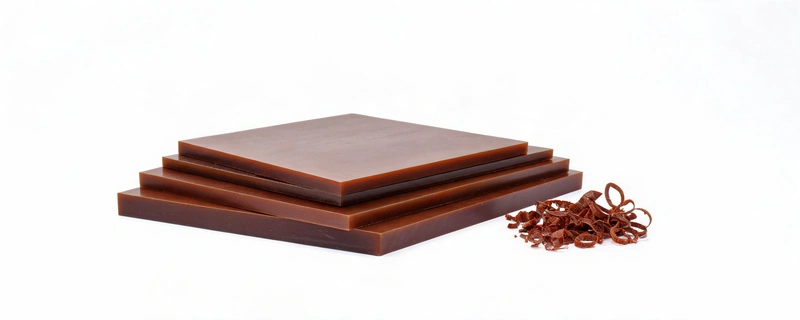
PAI sheet is supplied as semi-finished stock for machining. Depending on the manufacturer and grade, the material may be unfilled or modified with selected fillers to adjust stiffness, friction, wear behavior or other properties.
2. Main Characteristics of PAI Sheet
High Mechanical Strength and Stiffness
One of the main reasons engineers specify PAI is its strong mechanical performance. Suitable grades can maintain high stiffness under demanding mechanical conditions, making the material useful for precision supports, structural components and load-bearing parts.
Wear and Friction Performance
Selected PAI grades are used in sliding and contact applications. Depending on the formulation, fillers such as graphite or PTFE may be incorporated to modify friction and wear behavior.
The performance of a sliding component is not determined by the polymer alone. Contact pressure, sliding velocity, counterface material, lubrication, surface finish and heat dissipation all influence service life.
Thermal Capability
PAI is designed for demanding thermal environments and can retain useful mechanical properties at elevated temperatures in suitable grades. However, maximum continuous-use temperature, short-term exposure limits and load-bearing capability are different considerations.
Engineers should evaluate the exact grade datasheet and actual service conditions rather than applying one temperature rating to every PAI sheet.
Dimensional Stability
PAI can provide good dimensional stability under suitable conditions. Nevertheless, moisture absorption, temperature changes, machining stress and part geometry can affect final dimensions.
For precision components, material conditioning, machining sequence and inspection temperature should be considered as part of the manufacturing plan.
3. Common Applications of PAI Sheet
Wear Pads and Guide Components
PAI sheet can be machined into wear pads, guide elements and sliding components used in machinery. These parts may be exposed to repeated contact, mechanical loading and frictional heat.
Thrust Washers and Bearing Components
Selected PAI grades are used for thrust washers, bearing cages, bushings and other precision components. Material selection should account for pressure, speed, lubrication and the condition of the mating surface.
Sealing Components
PAI can be considered for selected seal rings, backup rings and precision sealing components. Chemical compatibility, pressure, temperature, deformation and surface finish should all be reviewed before choosing a grade.
Industrial Precision Parts
Other applications include mechanical supports, fixtures, insulating components and custom-machined parts where high stiffness and dimensional requirements are important.
4. PAI Sheet with Fillers: What Should You Know?
PAI stock shapes may be available in different formulations. Fillers and modifiers can change the material's mechanical behavior, friction, wear characteristics and machinability.
- Unfilled PAI: Used when the base polymer's mechanical and thermal properties are appropriate for the component.
- Graphite-modified PAI: Certain formulations use graphite to modify friction and wear performance in sliding applications.
- PTFE-modified PAI: PTFE may be used in selected formulations to influence friction and sliding behavior.
- Other filled PAI: Reinforcing or functional fillers may be used to adjust stiffness, dimensional behavior or other application-specific properties.
These formulations are not interchangeable. A grade optimized for wear may not be the best choice for every structural or electrical application. Confirm the exact formulation and datasheet before ordering.
5. PAI Sheet CNC Machining Considerations
PAI sheet is commonly converted into finished components through CNC milling, turning, drilling and other machining processes. Because precision parts may have demanding dimensional requirements, machining conditions need to be selected carefully.
Tool Selection
Sharp, wear-resistant cutting tools are important. Carbide tooling is commonly considered for machining engineering plastics. For abrasive filled grades or demanding production runs, more wear-resistant tooling may be appropriate. Diamond tooling can be evaluated where the material formulation and production economics justify it.
Heat Management
Excessive cutting heat can affect surface quality and dimensional accuracy. Use a suitable combination of cutting speed, feed, tool geometry and chip evacuation. Air blast or an appropriate coolant may be considered according to the grade, machining process and supplier recommendations.
Workholding and Internal Stress
Avoid excessive clamping pressure, particularly for thin or complex components. A rigid and evenly supported setup helps reduce vibration and deformation during machining.
For parts with tight tolerances, a staged roughing and finishing process may help manage dimensional changes. Any stress-relief or conditioning procedure should follow the recommendations for the specific material grade.
Inspection After Machining
Final dimensions should be inspected after the component has stabilized under controlled conditions. Temperature, moisture conditioning and measurement method can influence the results, particularly for precision parts.
6. PAI Sheet vs. PEEK Sheet
PAI and PEEK are both high-performance engineering plastics, but they serve different engineering requirements. Neither material is automatically the better choice for every application.
- Mechanical stiffness: PAI is often considered where high stiffness and strength are key design priorities. PEEK also offers strong mechanical performance across multiple grades.
- Moisture behavior: PAI requires attention to moisture uptake and conditioning. PEEK generally has lower moisture absorption, which can be advantageous for some precision applications.
- Impact and toughness: The comparison depends on the grade and test conditions. The required toughness should be checked rather than assumed from the polymer name alone.
- Machining: Both materials can be CNC machined, but their machining behavior, stress management and tool requirements differ.
- Cost: Compare the complete component cost, including material, machining time, waste, tolerances and expected service life.
For a practical selection, compare the technical datasheets of the exact PAI and PEEK grades under the same test methods.
7. How to Select the Right PAI Sheet
Selecting PAI sheet should begin with the actual component requirements rather than simply choosing the highest specification material.
- Operating conditions: Define temperature, mechanical load, speed and duty cycle.
- Wear requirements: Identify contact pressure, sliding distance, counterface material and lubrication conditions.
- Environmental exposure: Check moisture, chemicals, cleaning agents and other surrounding conditions.
- Dimensional requirements: Specify dimensions, tolerances, flatness and surface finish.
- Material formulation: Confirm whether unfilled or modified PAI is required.
- Manufacturing method: Consider stock-sheet machining, production volume and finished-part geometry.
Providing a technical drawing and a short description of the working environment helps a supplier evaluate the appropriate material form and grade.
8. Storage and Handling
PAI stock should be stored in a clean, dry and controlled environment. Protect sheets from direct sunlight, contamination, unnecessary temperature changes and mechanical damage.
Because moisture absorption can influence dimensions, material conditioning may be important before precision machining or final inspection. Follow the manufacturer's storage and processing recommendations for the supplied grade.
During handling, avoid dropping sheets or creating concentrated impact loads at edges and corners. Support large sheets adequately to reduce the risk of damage during transport and storage.
9. PAI Sheet Supply from Teda Plastics
Teda Plastics supplies engineering plastic materials for industrial buyers, distributors and machining companies. Our PAI product range is intended for customers who need material for demanding mechanical and precision applications.
When making an inquiry, you can provide the required sheet dimensions, thickness, grade or intended application. If you need finished components, you can also send a technical drawing for evaluation.
We can discuss material selection, available stock forms and machining requirements according to your project.
Frequently Asked Questions About PAI Sheet
1. What is PAI sheet?
PAI sheet is a semi-finished stock form made from Polyamide-imide, a high-performance amorphous engineering polymer. It is used to machine precision components that require a combination of mechanical strength, stiffness, wear resistance and thermal performance.
2. What color is PAI sheet?
Many unfilled PAI stock shapes are dark brown, amber-brown or similar in appearance. The exact color depends on the grade, formulation, fillers and manufacturing process.
3. What are the main applications of PAI sheet?
Selected PAI sheet grades are machined into wear pads, thrust washers, bushings, bearing components, precision supports and other industrial parts. The suitable grade depends on load, speed, temperature, environment and design requirements.
4. Is PAI sheet suitable for high-temperature applications?
PAI is designed for demanding thermal environments, but its practical service temperature depends on grade, mechanical load, exposure time, surrounding environment and component design. The relevant grade datasheet should be checked before specifying it.
5. Does PAI sheet absorb moisture?
Yes. PAI can absorb moisture, and moisture uptake may affect dimensions and mechanical behavior. Conditioning, storage, machining sequence and final inspection should be considered when tight dimensional tolerances are required.
6. Can PAI sheet be CNC machined?
Yes. PAI sheet can be machined into precision parts using suitable CNC processes. Tool selection, heat control, workholding, internal stress, chip removal and dimensional stabilization should be considered for the specific grade and geometry.
7. Is PAI better than PEEK?
Neither material is universally better. PAI may be selected for applications requiring high stiffness, strength and wear performance, while PEEK offers a different balance of toughness, chemical resistance, moisture behavior and processing characteristics. The right choice depends on the actual service conditions.
8. How do I choose the right PAI sheet grade?
Consider operating temperature, mechanical load, sliding speed, wear, moisture, chemical exposure, dimensional tolerances and machining requirements. Provide the supplier with the application details or component drawing to help evaluate the appropriate grade.
Need PAI Sheet for Your Application?
Send us your required dimensions, material specifications or technical drawing. Teda Plastics can help review your PAI material requirements and discuss suitable stock forms or machined components.
Request a Quote