Polyetheretherketone (PEEK) is a high-performance semi-crystalline thermoplastic known for its high temperature capability, mechanical strength, wear resistance and chemical resistance. Teda Plastics supplies PEEK in multiple forms and grades for demanding industrial applications, including machined components and application-specific material solutions.
From raw materials to semi-finished stock and custom-machined components, explore the PEEK form that fits your production process.
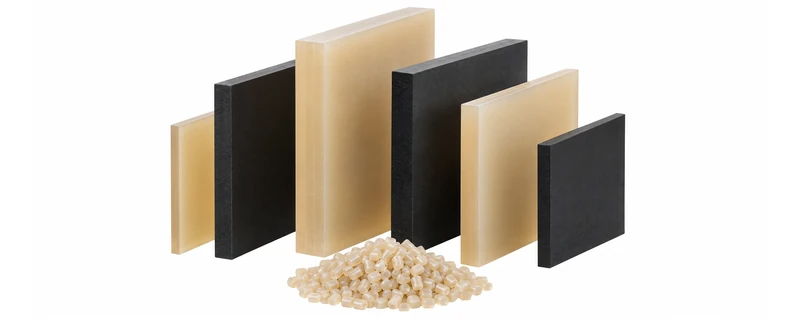
PEEK sheet stock for precision machining, wear components, structural parts and electrical applications. Thickness and dimensions can be discussed according to project requirements.
Read PEEK Sheet Guide →
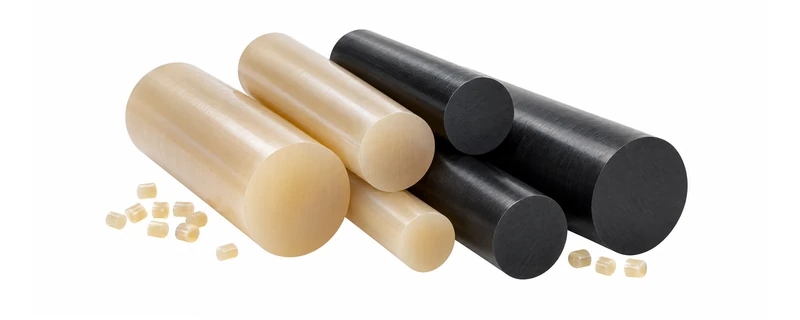
Round PEEK rods for turning, milling, bushings, rollers, seals and other precision-machined components. Available grades may include unfilled and reinforced formulations.
Read PEEK Rod Guide →
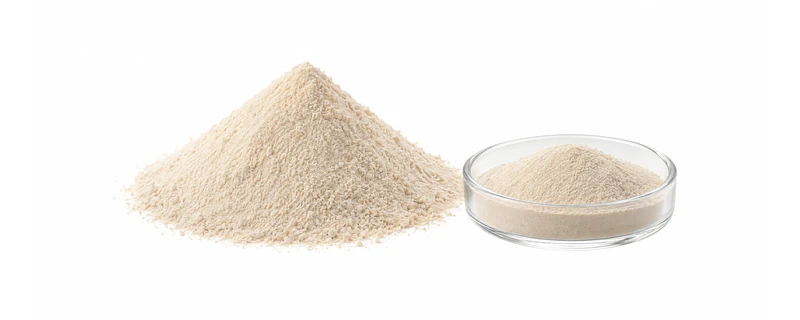
PEEK powder grades for selected coating, compounding and other polymer-processing applications. Particle size and powder characteristics depend on the intended process.
Read PEEK Powder Guide →
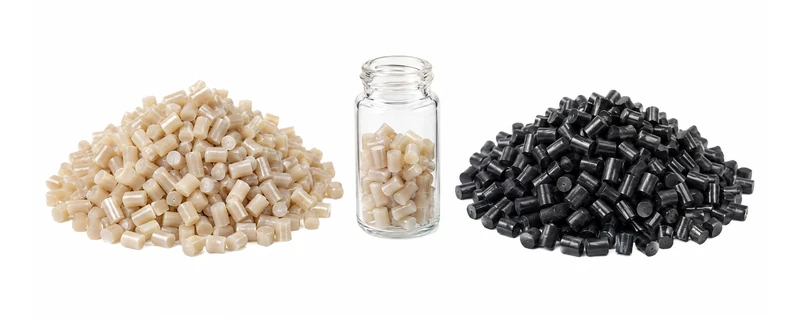
PEEK resin pellets for injection molding, extrusion and other suitable melt-processing methods. Unfilled and compounded grades can be selected according to requirements.
Read PEEK Granules Guide →
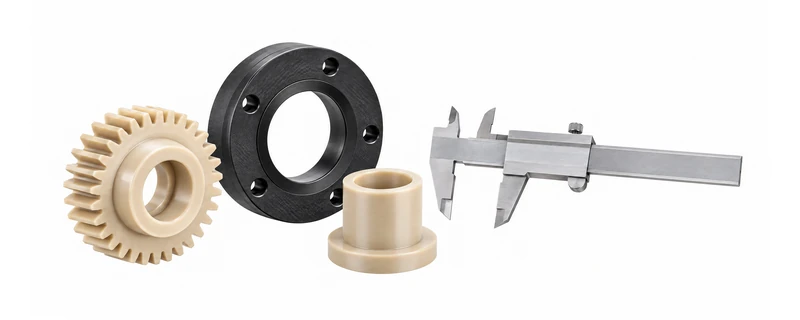
Custom PEEK components manufactured from customer drawings. Machining strategy, dimensional tolerances and inspection requirements are reviewed according to part geometry and application.
Read PEEK CNC Guide →
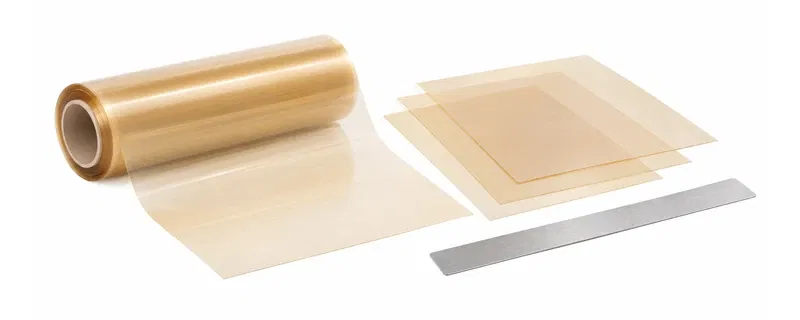
Thin PEEK film for selected electrical insulation, electronic, industrial and high-temperature applications. Film thickness and properties should be matched to the design requirements.
Read PEEK Film Guide →PEEK is available in unfilled and reinforced formulations. The right grade depends on mechanical loading, wear conditions, dimensional requirements and electrical properties.
Unfilled PEEK offers a balanced combination of mechanical strength, toughness, chemical resistance and temperature performance.
Carbon fiber reinforced PEEK is often selected when higher stiffness, improved load-bearing capability and dimensional stability are required.
Glass fiber reinforced PEEK can provide increased stiffness and reduced thermal expansion for selected structural and dimensional applications.
Note: Reinforced PEEK properties vary with fiber content, fiber orientation, manufacturing process and supplier formulation. Confirm the specific grade data before final material selection.
The following figures are indicative reference values for unfilled virgin PEEK. Actual values depend on the grade, processing method, specimen preparation and test conditions.
| Property | Typical Reference Value | Test Method / Notes |
|---|---|---|
| Density | Approx. 1.30 g/cm³ | ISO 1183 |
| Tensile Strength | Approx. 90–100 MPa | ISO 527 |
| Flexural Modulus | Approx. 4.0–4.1 GPa | ISO 178 |
| Glass Transition Temperature (Tg) | Approx. 143°C | DSC |
| Melting Temperature (Tm) | Approx. 343°C | DSC |
| Continuous Use Temperature | Often referenced around 250°C | Depends on grade, load and environment |
These figures are not guaranteed design values or product specifications. For engineering calculations, request the technical data sheet for the exact PEEK grade being considered. Filled grades may have significantly different mechanical, thermal, electrical and tribological properties.
PEEK is selected for components that require a combination of temperature resistance, mechanical performance, chemical resistance and dimensional reliability.
PEEK may be used in wafer-handling components, equipment fixtures, insulation parts and selected fluid-handling components. Grade purity, particle generation and chemical compatibility should be evaluated for each process.
PEEK grades are used in selected seals, back-up rings, valve components and electrical connectors. Pressure, temperature, fluid compatibility and sour-service requirements must be checked against the specific grade.
Selected PEEK grades are used in medical equipment, surgical instrument components and other healthcare applications. Implant applications require specifically qualified medical or implant-grade materials and appropriate regulatory documentation.
PEEK can be considered for lightweight structural parts, electrical components, clips and precision components where temperature and mechanical performance are important.
PEEK is used in selected bearings, bushings, gears, wear strips and machine components. Grade selection should consider load, speed, lubrication and operating temperature.
PEEK offers resistance to many chemicals and can be used in selected pump, valve, sealing and fluid-handling components. Compatibility should be confirmed for the actual chemical concentration and operating conditions.
Selecting PEEK is not only about temperature resistance. The operating environment and component design are equally important.
Identify the normal operating temperature, peak temperature, exposure duration and mechanical load. PEEK's high-temperature capability does not mean every grade can maintain the same mechanical performance under every condition.
For components requiring higher stiffness or load-bearing performance, carbon fiber or glass fiber reinforced grades may be considered. For applications requiring greater toughness, unfilled PEEK may be more suitable.
For bearings, bushings and sliding components, consider contact pressure, sliding speed, lubrication, mating surface and operating temperature. Bearing-grade PEEK formulations vary, so review the supplier's grade-specific data.
Check the chemical type, concentration, temperature and exposure time. PEEK resists many chemicals, but compatibility should be confirmed for the actual service environment.
Choose the appropriate form according to your production method: granules for suitable melt processing, powder for compatible powder-based processes, sheet and rod for machining, and film for thin-section applications.
For CNC components, provide drawings, critical dimensions, tolerances, surface finish requirements and inspection criteria. Achievable tolerances depend on geometry, material grade, dimensions and machining conditions.
We work with customers sourcing engineering plastics for industrial production, component manufacturing and customized projects.
Discuss PEEK powder, granules, sheets, rods, films and machined components according to your production needs.
Share your application, operating conditions and technical requirements so the suitable material grade can be evaluated.
Send your engineering drawings for a review of material selection, machining feasibility, tolerances and inspection requirements.
Common questions about PEEK grades, forms, performance and material selection.
PEEK stands for Polyetheretherketone. It is a high-performance semi-crystalline thermoplastic known for its mechanical strength, thermal performance, wear resistance and chemical resistance. It is used in demanding industrial and engineering applications.
Unfilled PEEK is commonly associated with continuous-use temperatures around 250°C. Actual performance depends on the material grade, mechanical load, environment and exposure duration. Always check the technical data for the selected grade.
Virgin PEEK is unfilled and offers a balanced property profile. CF30 PEEK contains carbon fiber reinforcement and is generally selected for higher stiffness and dimensional stability. GF30 PEEK contains glass fiber reinforcement and can provide increased stiffness. The exact properties depend on the formulation.
In selected applications, PEEK can replace metal where weight reduction, corrosion resistance, electrical insulation or reduced friction is important. However, the suitability depends on load, temperature, wear, creep and component design. Engineering evaluation is recommended before substitution.
Custom CNC machined PEEK parts can be discussed based on customer drawings and specifications. Please provide the drawing, material grade, quantity, critical tolerances and inspection requirements for evaluation.
No. General industrial PEEK should not automatically be considered suitable for implant applications. Medical and implant uses require specifically qualified materials, appropriate documentation and compliance with the relevant regulatory requirements.
Please specify the product form, material grade, dimensions, quantity and intended application. For CNC parts, include drawings and tolerance requirements. For powder or granules, include the intended processing method and any relevant material specifications.
Tell us what you need — PEEK sheets, rods, powder, granules, films or custom CNC machined parts. Send your specifications or drawings to discuss the right material for your application.
Request a PEEK Quote