PAI film is a specialized thin-film form of polyamide-imide, a high-performance polymer family known for its mechanical and thermal capabilities. Depending on the manufacturing process and grade, PAI film may be considered for applications requiring a combination of dimensional, mechanical and electrical performance.
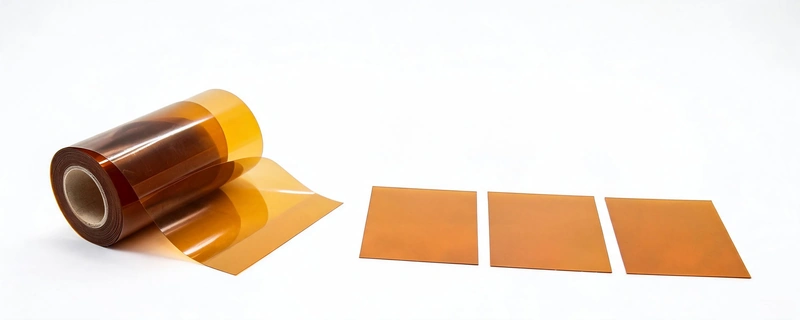
1. What Is PAI Film?
PAI stands for Polyamide-imide. It is an engineering polymer containing amide and imide structures in its molecular backbone. PAI materials are used in demanding applications where ordinary engineering plastics may not provide the required performance.
PAI film is a thin-film product made from a suitable PAI material system. Its final characteristics depend on resin chemistry, film-forming technology, thickness, processing conditions and any surface treatment or coating.
It is important not to confuse PAI film with PI film. PI stands for polyimide, a different polymer family with its own established film products and processing technologies. The two materials should be evaluated separately.
2. Main Characteristics of PAI Film
Thermal Performance
PAI is known as a high-performance polymer family and can be considered for applications involving elevated temperatures. However, the usable temperature range of a film depends on the specific grade, thickness, mechanical loading and exposure conditions.
Mechanical Strength and Dimensional Behavior
Selected PAI materials offer high mechanical strength and stiffness. In thin-film applications, tensile behavior, tear resistance, flexibility and dimensional stability should be evaluated using data for the actual film product.
Electrical Insulation Potential
PAI-based materials may be considered for selected electrical insulation applications. Dielectric strength, dielectric constant, dissipation factor and insulation resistance depend on film formulation, thickness, humidity and test conditions.
Chemical and Environmental Resistance
Chemical resistance is not universal. The effects of solvents, cleaning agents, oils, moisture and elevated temperatures should be checked against the specific grade and exposure conditions.
3. Typical Applications of PAI Film
Specialized Electrical Insulation
PAI film may be evaluated for electrical insulation applications where a thin polymer layer is required. The material must meet the electrical, thermal and mechanical requirements of the complete insulation system.
Industrial Protective Layers
Depending on the film construction, PAI may be considered for protective layers in industrial equipment and specialized assemblies. Surface durability, adhesion and environmental resistance should be confirmed for the intended use.
Precision Components
Thin polymer films can be used as separators, insulating layers or protective elements in precision assemblies. Film thickness tolerance, flatness, handling and dimensional stability are important selection factors.
Specialty Engineering Applications
PAI film may also be evaluated in projects requiring specialized combinations of thermal and mechanical properties. Actual suitability should be established through product data and application testing.
4. Important Film Specifications
When selecting PAI film, the product should be evaluated by its technical specifications rather than appearance alone. The following parameters are commonly important:
- Film thickness: Determines the physical dimensions and influences electrical and mechanical performance.
- Thickness tolerance: Important for lamination, insulation assemblies and precision manufacturing.
- Tensile properties: Relevant to handling, winding, converting and mechanical loading.
- Dielectric properties: Include dielectric strength and other electrical parameters required by the application.
- Thermal behavior: Includes dimensional change and mechanical performance under the intended temperature conditions.
- Surface characteristics: Surface energy, roughness and treatment may affect printing, coating and bonding.
- Roll or sheet format: Confirm width, length, winding requirements and packaging format.
5. PAI Film Processing and Converting
Slitting and Cutting
Film may need to be slit or cut to specific dimensions. Tool condition, film support and handling tension should be controlled to minimize edge defects, wrinkles and dimensional variation.
Lamination
When PAI film is laminated to another material, temperature, pressure, surface condition and adhesive compatibility become important. The selected process should be validated with the actual substrate and film grade.
Bonding and Adhesion
Bonding performance depends on the surface chemistry of the film, the adhesive system and the substrate. Surface cleaning or treatment may be required. Conduct adhesion tests before full-scale production.
Thermal Exposure
During converting or assembly, avoid assuming that the bulk resin's thermal performance automatically applies to the finished film construction. Adhesives, coatings and other layers may have lower temperature limits.
6. PAI Film vs. PI Film
PAI and PI are separate high-performance polymer families. PI film is widely used in established electrical and flexible-circuit applications. PAI film should be considered according to its own available grades and documented performance.
- PAI film: A polyamide-imide film product whose availability and application range depend on the specific manufacturer and material system.
- PI film: A polyimide film product commonly used in electrical insulation, flexible circuits and other high-temperature applications.
Neither material is automatically superior in every application. Compare the actual film thickness, electrical data, thermal behavior, mechanical properties, chemical compatibility and total system cost.
7. PAI Film vs. PET Film
PET film is commonly used in packaging, electrical insulation and general industrial applications. PAI belongs to a different high-performance polymer category and may be evaluated when more demanding material requirements exist.
- PET film: Often selected for cost-effective general-purpose film applications.
- PAI film: Considered for specialized applications where the specific grade provides required performance beyond conventional film materials.
The choice should be based on operating temperature, mechanical stress, electrical requirements, chemical exposure, converting method and cost.
8. How to Select the Right PAI Film
A clear technical specification helps identify a suitable film and reduces the risk of selecting an incompatible product.
- What is the intended application?
- What film thickness and tolerance are required?
- Do you need rolls, sheets or custom-cut pieces?
- What are the operating temperature and exposure duration?
- Are dielectric strength or other electrical properties required?
- Will the film be bonded, laminated, coated or mechanically fixed?
- What substrates, adhesives or chemicals will contact the film?
- What quantity, width and length are required?
For demanding electrical or safety-critical applications, request the relevant technical documentation and conduct validation tests under actual operating conditions.
9. Storage and Quality Control
Film quality can be affected by storage, handling and converting conditions. Proper protection helps maintain product consistency before processing.
- Keep the packaging clean: Protect film from dust, oil and other surface contamination.
- Control storage conditions: Follow supplier guidance for temperature and humidity.
- Avoid mechanical damage: Prevent creases, scratches, punctures and excessive winding tension.
- Check dimensions: Verify thickness, width and length against the purchase specification.
- Inspect the surface: Check for visible defects that may affect converting or final assembly.
10. PAI Film Supply from Teda Plastics
Teda Plastics Co., Ltd. supplies engineering plastic materials in different product forms for industrial buyers, distributors and manufacturing customers.
For PAI film inquiries, please share your intended application, required thickness, dimensions, quantity and technical specifications. These details help us review your requirements and discuss suitable available options.
We also work with other high-performance engineering plastics, including PEEK, PI, PTFE, PPS, PEI and PPSU, in forms such as powder, granules, sheets, rods, films and CNC machined parts.
Frequently Asked Questions About PAI Film
1. What is PAI film?
PAI film is a thin-film form of polyamide-imide material. Its availability, properties and applications depend on the specific grade and manufacturing process.
2. Is PAI film the same as PI film?
No. PAI means polyamide-imide, while PI means polyimide. They are different polymer families and should not be treated as interchangeable.
3. What is PAI film used for?
Depending on the product grade, PAI film may be considered for specialized insulation, protective layers and other industrial applications requiring specific mechanical or thermal performance.
4. Is PAI film suitable for flexible printed circuits?
Suitability for flexible printed circuits must be confirmed for the exact film grade and complete circuit construction. Electrical, thermal, dimensional and processing requirements should be evaluated.
5. What color is PAI film?
The appearance of PAI film depends on its formulation, thickness and manufacturing process. Color alone cannot be used to identify a grade or determine its properties.
6. Can PAI film be bonded to metal or other materials?
Bonding depends on surface condition, adhesive chemistry, preparation method and operating environment. Compatibility should be tested using the actual film and substrate.
7. How should PAI film be stored?
Store PAI film in clean, dry packaging and protect it from contamination, excessive humidity, mechanical damage and unsuitable storage temperatures. Follow supplier recommendations.
8. What information is needed for a PAI film quotation?
Provide the required thickness, width, length, quantity, application, operating conditions and any electrical or mechanical specifications to help identify a suitable product.
Looking for PAI Film?
Tell us your required film dimensions, application and technical requirements. Contact Teda Plastics to discuss suitable material options for your project.
Request a Quote