PAI rod (Polyamide-imide rod) is a high-performance engineering plastic stock shape used to manufacture precision bushings, bearings, thrust washers, wear rings and other demanding mechanical components. Its combination of strength, stiffness and thermal capability makes it a candidate for applications where conventional engineering plastics may not provide sufficient performance.
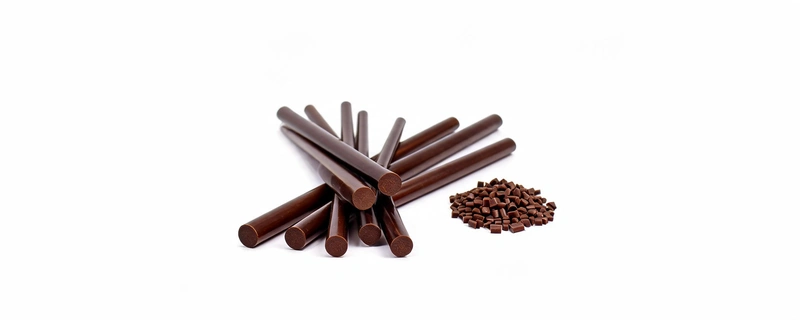
PAI rod is typically supplied as round stock for CNC turning, milling and drilling. Depending on the grade, the material may be unfilled or modified with selected fillers to adjust mechanical or frictional characteristics.
1. What Is PAI Rod?
PAI stands for Polyamide-imide, an amorphous high-performance polymer containing amide and imide structural units. It is recognized for its combination of mechanical strength, stiffness and performance in demanding thermal environments.
PAI round rods are semi-finished materials designed for further machining. They allow manufacturers to produce custom cylindrical components without having to develop a dedicated molding tool for every part.
Common finished components include bushings, bearing elements, rollers, spacers, thrust washers, wear rings and custom mechanical parts.
2. Main Characteristics of PAI Rod
High Strength and Stiffness
Selected PAI grades provide high mechanical strength and stiffness. These characteristics can be useful in components exposed to compressive loads, contact pressure and repeated mechanical stress.
However, no polymer is completely immune to deformation. Creep, stress relaxation and dimensional changes must be evaluated under the actual load, temperature and operating duration.
Wear and Friction Performance
PAI is used in selected sliding and contact applications. Depending on the formulation, fillers may be incorporated to modify friction, wear behavior or stiffness.
The actual wear performance of a bushing or bearing depends on several factors, including contact pressure, sliding speed, counterface roughness, lubrication, temperature and heat dissipation.
Thermal Performance
PAI is designed for demanding thermal environments. Suitable grades can retain useful mechanical performance at elevated temperatures, making them candidates for selected industrial and precision applications.
Engineers should distinguish between short-term temperature exposure, continuous service temperature and mechanical load-bearing capability. The correct limits must be taken from the specific grade datasheet.
Dimensional Behavior
PAI can provide good dimensional stability in suitable applications, but moisture absorption and temperature changes may influence its dimensions.
For precision bushings and bearing components, the machining process, material conditioning, installation clearance and operating environment should be considered together.
3. Common Applications of PAI Rod
Bushings and Bearing Components
Selected PAI grades can be machined into bushings, bearing elements and sliding components. These parts may operate under high contact pressure or elevated temperatures, depending on the application design.
When designing a bushing, engineers should evaluate bearing pressure, sliding velocity, PV conditions, counterface material, lubrication and heat dissipation. Material selection should be based on the complete tribological system rather than a single property.
Hydraulic and Pump Components
PAI rod may be used to manufacture selected wear rings, backup rings, spacers and precision components in hydraulic or pump systems.
Fluid compatibility, pressure, temperature, clearance and dimensional stability are important considerations. Chemical resistance should be verified for the exact fluid, concentration and operating conditions.
Automotive and Transmission Components
Selected PAI grades may be considered for thrust washers, bushings and other components exposed to mechanical loading and friction. The final choice depends on the transmission design, lubrication, temperature and expected service life.
Aerospace and Precision Machinery
PAI components are used in certain specialized mechanical and aerospace applications where high mechanical performance and thermal capability are required.
For safety-critical or regulated applications, material qualification, traceability and the relevant industry requirements must be confirmed separately.
4. PAI Rod Grades and Filled Formulations
PAI rods may be available in different formulations. Fillers can change the material's stiffness, friction, wear behavior, thermal expansion and machining characteristics.
- Unfilled PAI: Suitable where the base polymer's mechanical and thermal characteristics meet the application requirements.
- Graphite-modified PAI: Certain formulations use graphite to modify friction and wear behavior in sliding components.
- PTFE-modified PAI: PTFE may be incorporated into selected grades to influence frictional behavior.
- Carbon fiber reinforced PAI: Reinforcement can increase stiffness and alter dimensional and mechanical behavior. It may also affect tool wear during machining.
A graphite-filled grade and a carbon-fiber-reinforced grade are designed for different purposes. Carbon fiber reinforcement should not automatically be described as a low-friction solution. Select the formulation according to the actual mechanical and tribological requirements.
5. PAI Rod CNC Machining Considerations
CNC machining is commonly used to produce PAI bushings, shafts, rings, spacers and custom cylindrical components. Turning is particularly useful for round stock, while milling and drilling may be used for more complex geometries.
Tool Selection
Use sharp cutting tools with suitable wear resistance. Carbide tooling is a common starting point for engineering plastic machining. Filled grades, especially those containing abrasive reinforcement, may require more wear-resistant tooling or a different tool strategy.
Tool geometry and cutting-edge condition are important for achieving a clean surface and minimizing heat generation.
Heat and Chip Management
Excessive heat can affect surface finish and dimensional accuracy. Select cutting speed, feed rate and depth of cut according to the material grade, tool and component geometry.
Ensure effective chip evacuation. Air blast or suitable coolant may be considered depending on the machining setup and material supplier's recommendations.
Workholding and Part Geometry
Avoid excessive clamping pressure, especially when machining thin-walled bushings or components with large length-to-diameter ratios.
Use appropriate support to minimize vibration, deformation and surface damage. For thin-wall parts, staged machining and careful finishing may improve dimensional control.
Dimensional Inspection
Precision components should be inspected after temperature stabilization and, where necessary, appropriate material conditioning.
Bore diameter, roundness, concentricity, wall thickness and surface finish may all be important for a finished PAI bushing or bearing component.
6. Design Considerations for PAI Bushings
Designing a PAI bushing requires more than selecting a rod diameter. The material's thermal and moisture behavior should be considered alongside mechanical loading and installation conditions.
Clearance and Thermal Expansion
Polymer components generally expand more than many metal components when temperature increases. The difference in thermal expansion between the bushing and its housing can change operating clearance.
Clearance should be calculated using the actual material grade, component dimensions, housing material and expected temperature range.
Moisture Absorption
PAI can absorb moisture. Depending on the grade and dimensions, this may influence the final size of a precision component.
Consider material conditioning and the moisture environment when specifying tight tolerances.
Load and Creep
Even high-performance polymers can deform under sustained mechanical loading. Long-term load, temperature and component geometry should be considered when evaluating creep and dimensional stability.
Sliding Conditions
For sliding bushings, consider contact pressure, velocity, lubrication, counterface finish and heat dissipation. A material that performs well in one bearing system may not perform equally well in another.
7. PAI Rod vs. PEEK Rod
PAI and PEEK are both high-performance engineering polymers, but their characteristics and processing considerations are different.
- Strength and stiffness: Selected PAI grades are often considered for demanding stiffness and strength requirements. PEEK also offers a broad range of mechanical grades.
- Moisture behavior: PAI requires attention to moisture absorption and dimensional conditioning. PEEK generally absorbs less moisture.
- Wear applications: Both polymers have grades used in sliding components. Compare the actual friction and wear data under relevant test conditions.
- Chemical environment: Compatibility depends on the chemical, temperature, concentration and exposure duration. Do not assume that either material is universally resistant.
- Cost and manufacturing: Compare stock availability, machining time, component yield and expected service life, not just material price.
The best material is the one that meets the complete application requirements with a suitable manufacturing process and total component cost.
8. How to Select the Right PAI Rod
Before purchasing PAI round rods, prepare the following information to help determine the suitable grade and size.
- Rod dimensions: Required diameter and length, including machining allowance.
- Mechanical loading: Static load, dynamic load, contact pressure and operating speed.
- Temperature: Normal operating temperature, peak temperature and duty cycle.
- Movement: Sliding, rotating, reciprocating or intermittent contact.
- Lubrication: Dry running, oil lubrication, grease or other operating conditions.
- Environment: Moisture, chemicals, cleaning agents and surrounding media.
- Final component: Drawing, tolerances, surface finish and expected service life.
A component drawing and a short description of the working conditions are often the most useful starting points for material selection.
9. PAI Rod Supply from Teda Plastics
Teda Plastics supplies engineering plastic materials for international industrial buyers, distributors and machining companies.
Our PAI rod inquiries can be based on required diameter, length, grade, material formulation and application. For customers producing finished components, we can also review drawings and discuss machining requirements.
When contacting us, please include the required dimensions, quantity and operating conditions. This helps us understand your project and evaluate suitable material options.
Frequently Asked Questions About PAI Rod
1. What is PAI rod?
PAI rod is a round semi-finished stock shape made from Polyamide-imide. It is commonly used for machining precision bushings, bearings, wear components and other industrial parts requiring high mechanical performance.
2. What are the main applications of PAI rod?
Selected PAI rod grades are machined into bushings, bearing components, thrust washers, wear rings, rollers and precision mechanical parts. The appropriate grade depends on load, speed, temperature, lubrication and environmental conditions.
3. Is PAI rod suitable for high-load bushings?
Certain PAI grades are suitable for high-load bushing applications because of their mechanical strength and stiffness. Actual performance depends on pressure, sliding speed, counterface, lubrication, temperature and component design.
4. Can PAI rod be used at elevated temperatures?
PAI is designed for demanding thermal environments, but its practical service temperature depends on grade, mechanical loading, exposure time and operating conditions. The specific grade datasheet should be reviewed before use.
5. Does PAI rod absorb moisture?
Yes. PAI can absorb moisture, which may influence dimensions and mechanical behavior. Conditioning, storage, machining sequence and final inspection are important for precision components.
6. Can PAI rod be CNC turned and milled?
Yes. PAI rod can be CNC turned, milled, drilled and machined into custom components. Tool selection, heat management, workholding, chip removal and dimensional stabilization should be adapted to the material grade and component geometry.
7. Is graphite-filled PAI better than unfilled PAI?
Not in every application. Graphite-filled PAI may provide different friction and wear behavior, while unfilled PAI offers the properties of the base formulation. Selection depends on mechanical, tribological and dimensional requirements.
8. How do I select the correct PAI rod size and grade?
Specify the required diameter, length, operating load, temperature, movement, lubrication, chemical exposure and dimensional tolerances. A drawing and application description help the supplier evaluate the appropriate stock form and grade.
Looking for PAI Rod for Your Project?
Send us your required diameter, length, material grade or component drawing. Teda Plastics can help review your PAI material requirements and discuss suitable stock forms or machined components.
Request a Quote