What Is PI Sheet?
PI sheet is a semi-finished material made from polyimide, a high-performance polymer known for its thermal stability, mechanical strength and electrical insulation characteristics. It is used in demanding industrial environments where ordinary engineering plastics may not provide the required performance.
Polyimide is a family of materials rather than one single universal grade. Different PI formulations and manufacturing methods can produce different mechanical, electrical, thermal and dimensional characteristics. The correct material should therefore be selected according to the actual application and technical requirements.
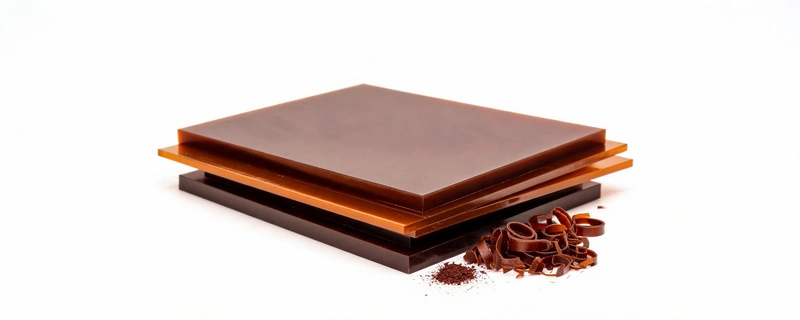
Key Characteristics of PI Sheet
1. High-Temperature Performance
Many polyimide materials are designed for applications involving elevated temperatures. Their thermal performance depends on the specific PI chemistry, manufacturing process, mechanical loading and operating environment.
It is important to distinguish between short-term temperature resistance, glass-transition or other thermal transition temperatures, and continuous service temperature under load. These values are not interchangeable. Always use the technical data for the exact grade when designing a component.
2. Mechanical Strength and Stiffness
Selected PI grades offer high strength and stiffness compared with many conventional plastics. These characteristics make PI useful for precision components, supports, insulation parts and other applications where mechanical performance is important.
Actual strength and modulus vary with grade, processing route, temperature and specimen direction. A grade-specific datasheet is necessary for engineering calculations.
3. Electrical Insulation
Many PI materials provide good electrical insulation and are used in electrical and electronic equipment. Dielectric performance depends on material formulation, thickness, temperature, frequency, moisture exposure and test method.
4. Dimensional Stability
PI is selected for some precision applications because suitable grades can maintain useful dimensional stability under demanding conditions. However, thermal expansion, moisture absorption, residual stress and machining strategy can all influence the final dimensions of a component.
Engineering note: PI is not one standardized material with identical properties across all suppliers. Confirm the exact grade, product form and datasheet before comparing specifications or approving a design.
PI Sheet Properties: What Should Engineers Check?
The following table summarizes the main properties that should be reviewed when evaluating a PI sheet. It intentionally avoids presenting one set of numerical values as universal for every polyimide grade.
| Property | General Characteristics | What to Verify |
|---|---|---|
| Thermal performance | Designed for selected high-temperature applications | Continuous service temperature and load conditions |
| Mechanical strength | Can provide high strength and stiffness | Tensile strength, flexural strength and modulus |
| Electrical insulation | Good insulation characteristics in many grades | Dielectric strength, volume resistivity and test conditions |
| Dimensional stability | Suitable for selected precision components | CTE, moisture response and residual stress |
| Chemical resistance | Depends on PI formulation and exposure conditions | Chemical type, concentration and temperature |
| Machinability | Can be machined into custom components | Grade, stock condition, geometry and tooling |
Common Applications of PI Sheet
Electrical and Electronic Components
PI sheet may be used for insulation components, electrical supports, separators and precision parts in equipment exposed to elevated temperatures. The required dielectric and thermal properties should be confirmed for the selected grade.
Industrial Machinery
Machined PI components can be used in selected machinery applications where temperature resistance, stiffness and dimensional performance are important. Typical component designs may include spacers, supports, guides and custom insulating parts.
Semiconductor and Precision Equipment
Certain PI grades are considered for components used in precision equipment. Material selection should take account of cleanliness, dimensional requirements, chemical exposure, thermal cycling and the specific operating environment.
Aerospace and Advanced Engineering
Specialized polyimide materials are used in some advanced engineering applications where a combination of thermal and mechanical properties is required. The exact material specification and qualification requirements depend on the application.
PI Sheet vs. PEEK Sheet
PI and PEEK are both high-performance engineering plastics, but they have different material structures, processing characteristics and application advantages. Neither material is automatically the best choice for every project.
| Comparison | PI Sheet | PEEK Sheet |
|---|---|---|
| Material family | Polyimide | Polyetheretherketone |
| Thermal performance | Selected grades offer very high thermal capability | High thermal capability for a thermoplastic |
| Processing | Many stock shapes are supplied as machinable, non-melt-processable materials | Thermoplastic processing is possible with suitable equipment and grade |
| Machining | Requires attention to grade, brittleness and stress | Requires attention to heat, stress and dimensional stability |
| Typical selection focus | Specialized thermal and precision requirements | Combination of strength, chemical resistance and thermal performance |
The comparison above is general. PI and PEEK each include different grades and product forms. For a reliable decision, compare the technical datasheets of the exact materials under consideration.
Can PI Sheet Be CNC Machined?
Yes. PI sheet stock can be machined into custom components using suitable CNC milling, turning, drilling and other machining processes. The machining strategy should be selected according to the particular PI grade, stock condition, part geometry and required tolerances.
Tool Selection
Use sharp cutting tools with suitable geometry to reduce cutting forces and help achieve a clean surface. Tool selection should be evaluated through machining trials for the actual grade and component.
Heat Management
Excessive cutting heat can affect surface quality and dimensional accuracy. Appropriate cutting parameters, tool condition and chip removal are important. Cooling methods should be selected according to the material supplier's guidance and the cleanliness requirements of the finished part.
Workholding and Support
Thin or delicate PI parts may deform if clamping forces are excessive or support is insufficient. Use controlled workholding and a machining sequence that minimizes unnecessary stress on the workpiece.
Dimensional Inspection
For precision components, define the inspection temperature, measurement method and reference conditions. Tolerances should be agreed based on part size, geometry, material grade and machining capability rather than assumed to be identical for every PI component.
How to Select the Right PI Sheet
Before ordering PI sheet, engineers and purchasing teams should clarify the application requirements. The following information helps reduce material selection errors and quotation delays.
- Material grade: Confirm the exact PI grade and material specification.
- Sheet dimensions: Specify length, width and thickness.
- Operating temperature: Provide normal and peak temperatures, including exposure duration.
- Mechanical requirements: Identify load, stiffness and dimensional requirements.
- Electrical requirements: Specify insulation or dielectric performance where applicable.
- Chemical environment: Identify the process media and exposure conditions.
- Machining requirements: Share drawings, tolerances and surface-finish expectations.
- Quantity: Provide the required quantity and expected purchasing schedule.
PI Sheet Supply from Teda Plastics
Teda Plastics Co., Ltd. supports inquiries for engineering plastic materials, including polyimide (PI) products and other high-performance polymers. For PI sheet requirements, please provide the required dimensions, grade information and intended application.
If you need machined PI components, you can also share your technical drawing and dimensional requirements for review. Material availability and processing options should be confirmed according to the specific project.
Looking for PI Sheet or Custom PI Parts?
Send us your required dimensions, material specification or technical drawing. Our team can review your inquiry and discuss suitable material options.
Frequently Asked Questions About PI Sheet
1. What is PI sheet used for?
PI sheet is used to manufacture selected high-temperature, electrical insulation and precision engineering components. Typical applications include insulating supports, spacers, guides and custom machined parts. The suitable grade depends on the operating temperature, load and environmental conditions.
2. Can PI sheet withstand high temperatures?
Many PI grades are designed for demanding high-temperature applications. However, the maximum usable temperature varies by grade and depends on load, exposure time, atmosphere and component design. Always check the specific grade's technical datasheet before setting a service limit.
3. Is PI sheet the same as Kapton film?
No. Both are associated with polyimide materials, but PI sheet and polyimide film are different product forms. Film is thin and flexible, while PI sheet is a thicker stock shape generally used for machining or manufacturing rigid components.
4. Can PI sheet be CNC machined?
Yes. Suitable PI sheet grades can be machined into custom parts by milling, drilling, turning and other machining operations. Tool sharpness, cutting heat, workholding and material condition should be considered to achieve the required dimensions and surface quality.
5. Is PI better than PEEK?
Not in every application. PI may be selected for specialized thermal or precision requirements, while PEEK offers a useful combination of mechanical strength, chemical resistance and thermoplastic processing options. The better choice depends on the exact grade and operating conditions.
6. What PI sheet thicknesses are available?
Available thicknesses depend on the PI grade, manufacturing method and supplier's stock range. When requesting a quotation, provide your required thickness, sheet length, width and quantity so availability can be checked.
7. Does PI sheet provide electrical insulation?
Many PI grades have useful electrical insulation properties and are used in electrical and electronic applications. Dielectric strength and resistivity vary with formulation, thickness, temperature and test conditions, so the exact grade should be verified for the design.
8. What information is needed for a PI sheet quotation?
Please provide the PI grade if known, required sheet dimensions, thickness, quantity and intended application. If you need CNC machined parts, include a technical drawing with tolerances and surface-finish requirements.