What Is PI Powder?
PI powder is a powdered form of polyimide, a family of high-performance polymers known for their thermal stability and specialized mechanical and electrical properties. Depending on its chemistry, particle characteristics and intended processing route, PI powder can be used in coatings, composite formulations, molding systems and other specialized industrial applications.
Unlike a standard thermoplastic pellet, PI powder is not automatically suitable for conventional injection molding. Different PI powder grades may have different chemical structures, curing or consolidation requirements, flow characteristics and processing windows.
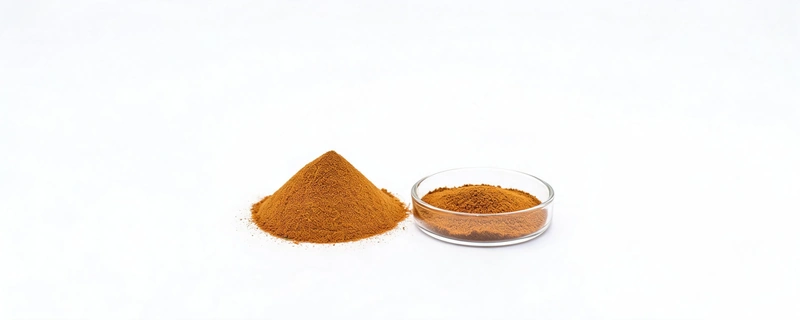
When evaluating PI powder, buyers should look beyond the product name. The exact grade, particle size distribution, moisture level, thermal behavior and recommended processing method are important factors in determining whether a powder is suitable for a particular application.
Common Types and Uses of PI Powder
Polyimide powders are developed for different manufacturing processes. The categories below describe common application directions rather than a universal classification system. Always confirm the supplier's grade designation and technical documentation.
1. PI Powder for Coatings
Certain PI powders are used in specialized coating formulations. Depending on the chemistry and coating system, they may be applied to components requiring thermal performance, electrical insulation or other functional surface characteristics.
The coating process may involve dispersion, application, drying and a specified thermal treatment. The correct process depends on the resin chemistry and coating formulation.
2. PI Powder for Molding and Consolidation
Some polyimide powders are designed for molding or consolidation processes. These materials may require controlled pressure and temperature, and in some cases a specific curing or post-treatment cycle.
A powder intended for one molding process should not be assumed to work in another. Check the recommended equipment, processing temperature, pressure and cycle before production.
3. PI Powder for Composites
PI powder may be used as a component in selected composite systems. It can be combined with other materials according to the formulation and intended processing method. Compatibility, dispersion and final composite performance should be evaluated for the specific system.
4. Fine PI Powder and Specialty Formulations
Some applications require carefully controlled fine powders or specialty particle characteristics. These may be important for coating uniformity, dispersion, surface finish or processing behavior. Finer particles do not automatically mean better performance; the required particle size depends on the process.
Important: PI powder is not one interchangeable product. A coating powder, a molding powder and a composite additive may have different chemistry and processing requirements. Confirm the exact intended use before ordering.
Key Characteristics of PI Powder
Thermal Performance
Many polyimide materials are designed for demanding thermal environments. However, the thermal behavior of a powder grade and the performance of a finished coating or molded component are not necessarily identical. Processing conditions, formulation and final material structure all matter.
Particle Size and Distribution
Particle size affects powder flow, packing, dispersion and surface characteristics. The appropriate size range depends on the intended process. Particle size distribution is often more useful than a single average value when evaluating consistency.
Powder Flow and Handling
Flow behavior can influence feeding, dosing, mixing and application. Particle shape, size distribution, surface condition, moisture and storage conditions may all affect how a PI powder behaves during processing.
Moisture and Storage Stability
Moisture exposure may affect powder handling and, depending on the grade and process, the quality of the final product. Follow the supplier's recommendations for packaging, storage, drying and handling.
Grade-Specific Mechanical and Electrical Performance
Mechanical strength, dielectric properties and other performance characteristics should be evaluated on the finished material or component using the relevant test methods. Powder appearance alone cannot establish these properties.
Why Does PI Powder Particle Size Matter?
Particle size is an important purchasing and processing specification. Two PI powders with similar chemical descriptions may behave differently if their particle size distributions, particle shapes or surface characteristics differ.
| Particle Characteristic | Potential Processing Influence | What Buyers Should Check |
|---|---|---|
| Average particle size | May influence flow, packing and surface characteristics | Specified measurement method and target value |
| Particle size distribution | Can affect consistency, packing and dispersion | D10, D50 and D90 where applicable |
| Particle shape | May influence flow and packing behavior | Particle morphology and supplier specification |
| Moisture content | May affect handling and process stability | Test method and maximum specified moisture |
| Bulk density | Can influence storage, feeding and dosing | Loose or tapped bulk density as applicable |
D10, D50 and D90 are commonly used particle-size distribution indicators. For example, D50 represents the size below which 50% of the measured particles fall under the specified measurement basis. Buyers should confirm whether the reported values are based on laser diffraction, sieving or another method.
There is no universal particle-size boundary that separates PI powder from PI micropowder across all suppliers and applications. Request the actual particle-size specification instead of relying only on product labels.
Industrial Applications of PI Powder
Specialized Industrial Coatings
Selected PI powder formulations are used in coating systems for components requiring specialized thermal or functional surface properties. The final performance depends on the complete coating formulation and application process.
Electrical and Electronic Materials
Certain polyimide formulations are used in electrical and electronic applications. The relevant insulation and dielectric properties should be verified on the finished material under the actual operating conditions.
Composite Materials
PI powder can be incorporated into selected composite formulations. Its role may include contributing to the polymer phase or serving as one component in a multi-material system. Compatibility and dispersion need to be confirmed.
Specialized Molded Components
Some PI powder grades are suitable for specialized molding or consolidation routes used to produce engineering components. The equipment and processing cycle must match the powder's formulation.
How Is PI Powder Processed?
The processing method depends on the powder grade. There is no single manufacturing process suitable for every polyimide powder. The supplier's technical instructions should be treated as the starting point for process development.
Coating Formulation and Application
For coating applications, the powder may be incorporated into a formulation using a suitable dispersion or application system. Mixing conditions, substrate preparation, coating thickness and thermal treatment can influence the final result.
Pressing and Consolidation
Certain PI powders are processed through controlled pressing or consolidation. The required pressure, temperature, dwell time and post-treatment depend on the grade and its intended manufacturing route.
Compounding and Composite Preparation
For composite applications, PI powder may be mixed with other constituents. Uniform dispersion, compatibility, feeding consistency and process stability should be evaluated during formulation development.
Processing reminder: Do not apply a generic injection-molding temperature or screw setting to every PI powder. Confirm whether the material is thermoplastic, thermosetting, precursor-based or intended for another specific processing route.
PI Powder vs. PEEK Powder vs. PI Granules
PI powder, PEEK powder and PI granules are different product categories. The right choice depends on material chemistry, product form and manufacturing process.
| Comparison | PI Powder | PEEK Powder | PI Granules |
|---|---|---|---|
| Material | Polyimide family | Polyetheretherketone | Polyimide family in granulated form |
| Product form | Powder particles | Powder particles | Granules or pellets |
| Typical processing routes | Grade-dependent coating, molding, consolidation or compounding | Grade-dependent coating, compounding, powder processing or other specialized uses | Depends on the specific resin and processing design |
| Thermoplastic behavior | Not universal; depends on PI chemistry | PEEK is a thermoplastic polymer | Cannot be assumed from granule form alone |
| Key purchasing focus | Grade, particle size and intended process | Grade, particle size and application | Resin type, pellet specification and processing compatibility |
A powder or granule form does not by itself define the processing behavior. Always confirm the polymer chemistry and recommended process for the exact product.
What Should Buyers Check Before Purchasing PI Powder?
A clear technical specification helps avoid mismatches between the powder and the customer's manufacturing process. Before placing an order, consider the following information.
- Grade and chemistry: Confirm the exact PI type and grade designation.
- Intended application: State whether the powder is for coatings, molding, composites or another use.
- Particle size: Request the specified particle size and distribution.
- Moisture content: Check the specified limit and test method.
- Bulk density: Confirm the relevant measurement where powder feeding or dosing matters.
- Processing conditions: Request the recommended temperature, pressure, curing or consolidation requirements.
- Packaging: Confirm packaging type, net weight and storage recommendations.
- Quality documentation: Request the available technical datasheet, specification and relevant test information.
PI Powder Storage and Handling
Powder storage conditions should follow the manufacturer's recommendations. Keep packaging properly sealed and protect the material from moisture, contamination and unsuitable temperatures.
During handling, follow the applicable workplace safety procedures for fine powders. Review the supplier's safety data sheet (SDS), use suitable protective equipment and apply appropriate dust-control measures where required.
If the material requires drying or conditioning before use, follow the exact temperature and time specified by the manufacturer. Avoid applying drying conditions from another PI grade without confirmation.
PI Powder Supply from Teda Plastics
Teda Plastics Co., Ltd. supports inquiries for engineering plastic materials, including polyimide (PI) products and other high-performance polymers. We welcome inquiries from international buyers, industrial manufacturers and material distributors.
For PI powder inquiries, please provide the intended application, required grade, particle size specification and estimated quantity. If you have a technical datasheet or existing material reference, sharing it can help clarify the required product.
The suitable PI powder grade, processing compatibility, packaging and availability should be confirmed according to your specific requirements.
Looking for PI Powder for Your Application?
Tell us your intended process, particle size requirements and target quantity. Our team can review your inquiry and discuss suitable PI material options.
Frequently Asked Questions About PI Powder
1. What is PI powder used for?
PI powder is used in selected industrial coating formulations, composite systems, specialized molding and consolidation processes. The exact application depends on the powder's chemistry, particle characteristics and recommended manufacturing route.
2. Can PI powder be used for injection molding?
Not all PI powders are suitable for conventional injection molding. Polyimide includes different material chemistries and processing types. Some powders are designed for coating, pressing, consolidation or other specialized routes. Always confirm the processing method for the exact grade.
3. What particle sizes are available for PI powder?
Particle sizes depend on the grade, manufacturing process and intended application. A supplier may specify an average particle size or a distribution such as D10, D50 and D90. Buyers should provide their process requirements and request the relevant particle-size specification.
4. What is the difference between PI powder and PI micropowder?
The terms are not separated by one universal industry-wide particle-size boundary. In general, micropowder refers to a finer particle range, but the exact meaning depends on the supplier and application. Compare actual particle-size data and measurement methods rather than product names alone.
5. Is PI powder the same as PEEK powder?
No. PI is a polyimide family, while PEEK is polyetheretherketone, a specific thermoplastic polymer. Their thermal behavior, chemical structure and processing requirements differ. The correct material depends on the application and the properties required in the finished product.
6. Can PI powder be used in coatings?
Certain PI powder grades are designed for specialized coating formulations. Their suitability depends on resin chemistry, dispersion behavior, substrate, application method and thermal treatment. A coating grade should be selected according to the complete coating process.
7. How should PI powder be stored?
Follow the supplier's storage instructions. In general, keep the powder in its original sealed packaging and protect it from moisture, contamination and unsuitable temperatures. Review the SDS and technical documentation for handling and any required pre-processing or drying.
8. What information is needed for a PI powder quotation?
Please provide the intended application, PI grade if known, particle-size requirements, quantity and preferred packaging. If possible, share your technical specification or existing material reference so the supplier can check product compatibility.