PEI powder is a powdered form of polyetherimide, an amorphous high-performance thermoplastic known for its combination of mechanical strength, thermal performance, dimensional stability and electrical insulation properties.
Unlike standard PEI sheets and rods, which are commonly used to manufacture finished components, PEI powder is selected for applications where a fine polymer material needs to be dispersed, deposited, blended or incorporated into a specialized formulation.
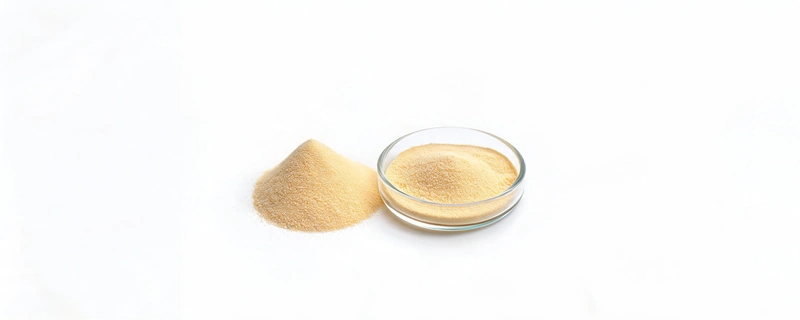
1. What Is PEI Powder?
PEI is an amorphous engineering thermoplastic. It is valued in demanding industrial applications for its strength, stiffness, heat resistance and electrical properties. Its natural color is commonly amber or translucent amber, although appearance varies with grade and processing.
PEI powder is produced and supplied in particle forms suitable for particular manufacturing processes. Its characteristics are not defined by polymer chemistry alone. Particle size, particle-size distribution, molecular characteristics, moisture condition and any surface treatment can all influence performance.
This is why it is important to select PEI powder according to the final application rather than assuming that every PEI powder grade can be used interchangeably.
2. Main Applications of PEI Powder
Specialty Coatings
Selected PEI powder grades may be used in specialty coating formulations where thermal performance, mechanical durability and electrical properties are important. The final coating performance depends on the complete formulation, substrate preparation, application method and curing or consolidation conditions.
Adhesive Formulations
PEI may be considered as a polymer component in certain high-performance adhesive systems. Its suitability depends on compatibility with the adhesive chemistry, processing temperature, bonding substrate and required service conditions.
Polymer Compounding
PEI powder may be evaluated for selected polymer blends and specialty compound formulations. However, compatibility and dispersion must be tested. Adding PEI does not automatically improve the flame performance, heat resistance or mechanical properties of another polymer.
Research and Specialty Manufacturing
Fine PEI powders can also be considered in laboratory development, specialty material formulations and application-specific manufacturing processes. The required particle characteristics depend on the equipment and production method.
3. Key Characteristics to Evaluate
When purchasing PEI powder, buyers should evaluate more than the polymer name. The following characteristics can have a direct influence on processing and final product quality.
- Particle size: Influences powder flow, dispersion, surface finish and coating uniformity.
- Particle-size distribution: Affects consistency during mixing, deposition and processing.
- Polymer grade: Different grades may have different molecular characteristics and processing requirements.
- Thermal behavior: Processing temperatures must be compatible with the selected grade and manufacturing method.
- Moisture condition: Moisture control may be important for consistent processing and formulation quality.
- Purity and contamination: Important for applications requiring controlled surface quality or electrical performance.
4. PEI Powder vs. PEI Sheet and Rod
PEI powder, sheet and rod are different supply forms intended for different manufacturing requirements. Choosing the correct form can reduce processing steps and improve production efficiency.
- PEI Powder: Considered for selected coating systems, specialty formulations, adhesives and compounding applications.
- PEI Sheet: Suitable for machining flat components, insulating parts, fixtures and structural components.
- PEI Rod: Commonly considered for turned components such as bushings, spacers, sleeves and precision parts.
If the final product is a solid mechanical component, PEI sheet or rod is usually a more direct starting material than powder. If the production process requires a fine polymer feedstock, powder may be more appropriate.
5. Is PEI Powder Suitable for Injection Molding?
Not every PEI powder is suitable for conventional injection molding. Powder developed for coating or specialty formulation applications may have particle characteristics and processing behavior that are unsuitable for standard molding equipment.
Injection molding requires a PEI grade specifically formulated and supplied for melt processing. Buyers should confirm the manufacturer's processing recommendations, melt behavior, drying requirements and compatibility with the intended equipment.
6. Storage and Handling Recommendations
Fine polymer powders should be handled with appropriate dust-control procedures. Airborne dust can create workplace exposure and housekeeping problems.
- Keep the material in sealed, clearly identified original packaging whenever possible.
- Store in a clean and dry environment, following the supplier's storage recommendations.
- Avoid unnecessary powder transfer and operations that generate airborne dust.
- Use suitable local exhaust ventilation and appropriate personal protective equipment.
- Follow the product safety data sheet (SDS) and applicable workplace safety requirements.
- Prevent contamination from other powders, processing residues and foreign materials.
7. Common Problems When Selecting PEI Powder
Choosing the Wrong Particle Size
A powder that is too coarse or too fine for the intended process may cause poor flow, inconsistent dispersion or uneven surface quality. Confirm the required particle-size range before ordering.
Assuming All PEI Grades Are the Same
PEI grades can differ in molecular characteristics, purity, processing behavior and intended use. A grade suitable for one coating process may not be appropriate for another application.
Ignoring Processing Compatibility
Powder performance depends on the complete manufacturing process. Temperature, mixing conditions, substrate, equipment and other formulation components should be considered during material selection.
Buying Without Technical Documentation
For industrial procurement, request relevant technical information such as the grade designation, particle-size data, technical data sheet and safety data sheet. Additional testing may be required for critical applications.
8. How to Select the Right PEI Powder Supplier
A reliable supplier should be able to clarify the material grade, intended application and available technical information. Before placing an order, buyers should consider the following points:
- Clear grade identification and product description.
- Particle-size information and available specifications.
- Technical data sheet and safety data sheet, where available.
- Packaging suitable for storage and international transportation.
- Communication about application and processing requirements.
- Consistent material identification between batches.
For specialized applications, it is advisable to discuss the actual manufacturing process with the supplier before confirming a material grade.
9. PEI Powder from Teda Plastics
Teda Plastics supplies engineering plastic materials in different forms for industrial buyers and manufacturing customers. Our product range includes high-performance polymers such as PEI, PEEK, PI, PTFE, PPS, PAI, PPSU and other engineering plastics.
If you are sourcing PEI powder, please share your intended application, required particle size, processing method and estimated quantity. These details help us evaluate the appropriate material specifications and discuss suitable supply options.
For customers manufacturing solid PEI components, we can also discuss PEI sheet, rod and CNC-machined parts according to drawings and application requirements.
10. Frequently Asked Questions About PEI Powder
1. What is PEI powder?
PEI powder is a powdered form of polyetherimide, an amorphous high-performance thermoplastic. Depending on its grade and particle characteristics, it may be used in specialty coatings, adhesives, research formulations and polymer compounding.
2. What is PEI powder used for?
Potential applications include specialty coating formulations, selected adhesive systems, polymer blends and other engineered formulations. Suitability depends on the powder grade, particle size, processing method and required performance.
3. Can PEI powder be used for high-temperature coatings?
Certain PEI powder grades may be considered for high-temperature coating systems. The coating process, substrate, binder system, film formation and service environment must be evaluated before selecting a grade.
4. Is all PEI powder suitable for injection molding?
No. Powder intended for coatings or specialty formulations is not automatically suitable for injection molding. Injection molding requires a grade specifically designed and processed for melt extrusion and molding.
5. Does PEI powder have flame-retardant properties?
PEI is known for its inherent flame performance, but the behavior of a powder-containing formulation depends on its composition, additives, processing and final product thickness. Fire classifications must be verified for the finished material.
6. Why is particle size important for PEI powder?
Particle size and distribution influence powder flow, dispersion, surface finish, coating uniformity and processing behavior. The appropriate range depends on the intended application and production equipment.
7. How should PEI powder be stored and handled?
Store PEI powder in sealed packaging in a clean, dry environment and follow the supplier's storage instructions. Avoid generating airborne dust and use suitable ventilation, dust-control measures and personal protective equipment.
8. Can Teda Plastics provide PEI powder specifications?
Contact Teda Plastics with your intended application and processing requirements to discuss available PEI powder grades, particle-size information and technical documentation.
Looking for PEI Powder?
Tell us about your application, required particle size and processing method. Teda Plastics can help you discuss suitable PEI material options for your industrial requirements.
Contact Teda Plastics