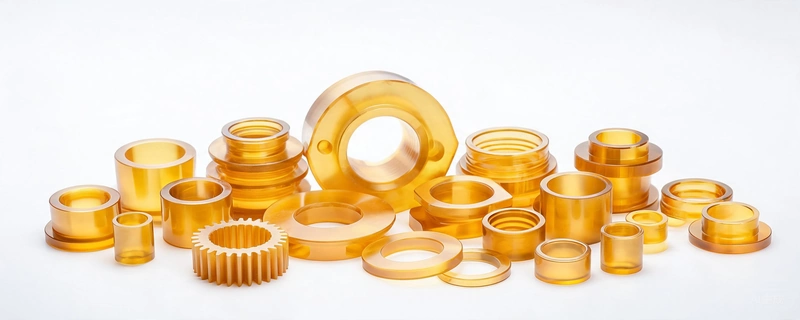
PEI CNC machining is a practical manufacturing method for producing custom components from polyetherimide, an amorphous high-performance thermoplastic known for its mechanical strength, thermal performance and electrical insulation properties. CNC machining is particularly useful for prototypes, customized geometries and low-to-medium-volume production where dedicated injection molds may not be economical.
1. What Is PEI CNC Machining?
PEI, or polyetherimide, is an amorphous engineering thermoplastic. Its combination of strength, stiffness, dimensional performance and thermal resistance makes it a candidate for demanding industrial and electrical applications.
CNC milling, turning, drilling and other machining operations can convert PEI sheets and rods into components with customer-specific dimensions and features. Compared with injection molding, machining does not require a dedicated mold, which can make it attractive for prototypes, replacement parts and specialized production runs.
However, successful PEI machining requires more than simply applying standard metal-machining parameters. Heat generation, residual stress, clamping pressure, tool condition and the original stock material can all affect the finished part.
2. What PEI Components Can Be Machined?
PEI stock shapes can be machined into a range of custom industrial components. Typical designs include:
- Electrical insulation components: Insulating supports, housings, spacers and structural parts.
- Precision mechanical parts: Brackets, bushings, fixtures and custom machine components.
- Fluid-handling components: Selected manifolds, connectors and component bodies, subject to chemical compatibility requirements.
- Industrial equipment parts: Custom supports, covers, guides and high-temperature components.
- Medical-device components: Selected instrument and equipment parts where the exact material grade and finished design have been validated.
- Electronic components: Insulating structures and precision parts used in electrical and electronic equipment.
The final application should determine the material grade, stock dimensions, machining method and inspection requirements. A material suitable for a general industrial fixture is not automatically suitable for a regulated medical device.
3. Critical Factors When Machining PEI
Tool Sharpness and Cutting Conditions
Sharp cutting edges help reduce cutting forces, friction and localized heat. Dull or damaged tools can increase surface damage, burr formation and the risk of dimensional variation. Tool geometry, feed rate and cutting speed should be adjusted according to the operation and the specific PEI grade.
Unfilled PEI and reinforced PEI grades may behave differently during machining. Glass-fiber or other reinforced formulations can increase tool wear, so tool selection should account for the material's filler content.
Residual Stress and Stress Relief
Residual stress can originate from the production of the original sheet or rod, as well as from machining itself. When substantial material is removed from one side of a component, the remaining stress may contribute to warping or dimensional movement.
For complex geometries, large material-removal operations or precision parts, a staged machining strategy may help. Stress-relief annealing can also be considered when recommended for the specific grade.
There is no single annealing temperature or cycle suitable for every PEI product. The procedure should follow the stock supplier's technical recommendations, including heating rate, holding time and cooling conditions.
Cooling and Heat Management
Excessive heat at the cutting zone can affect surface quality and dimensional stability. Depending on the machining operation and equipment, controlled air cooling or a compatible coolant may be appropriate.
Water-based or other machining fluids should not be selected automatically. Their chemical compatibility with the PEI grade, any additives and the intended end use should be checked. For applications requiring strict cleanliness, coolant residue and post-machining cleaning procedures also need consideration.
Workholding and Clamping
PEI components should be held securely without excessive clamping force. Over-tightening can deform thin sections or introduce stress that becomes visible after the part is released.
For thin walls, long components or irregular shapes, consider soft jaws, support fixtures or staged machining. Stable workholding helps maintain repeatability while reducing the risk of distortion.
4. How to Improve PEI Machining Accuracy
Dimensional accuracy depends on the complete machining process, not just the machine's nominal positioning capability. The following practices can help improve consistency:
- Check the incoming stock: Confirm grade, dimensions, surface condition and material documentation before machining.
- Use staged material removal: Rough machine first, then allow the component to stabilize before finishing critical features.
- Control cutting heat: Avoid excessive friction and use suitable cutting conditions.
- Support thin sections: Reduce vibration and deformation during machining.
- Inspect at stable temperatures: Allow parts to reach a consistent temperature before final dimensional inspection.
- Agree on critical dimensions: Identify datum surfaces, measurement methods and tolerance requirements before production.
A tolerance such as ±0.01 mm may be achievable for selected features under controlled conditions, but it should never be treated as a universal guarantee. Part size, geometry, material condition, machining strategy and inspection equipment all influence the achievable result.
5. PEI Part Design: Avoid Common Problems
Good component design can reduce machining difficulty and improve the reliability of the finished part.
- Avoid sharp internal corners: Use suitable radii to reduce local stress concentration and simplify tool access.
- Maintain reasonable wall thickness: Very thin walls can be difficult to hold and may deform during machining.
- Consider hole geometry: Deep, small-diameter holes require attention to tool deflection, chip evacuation and heat.
- Plan threads carefully: Select thread dimensions and engagement lengths appropriate for the component's loading conditions.
- Minimize unnecessary material removal: Near-net stock dimensions can reduce machining time, material waste and residual-stress effects.
- Define functional surfaces: Specify which dimensions and surface finishes are essential to the part's performance.
6. CNC Machining or Injection Molding: Which Is Better?
The right manufacturing process depends on production volume, component geometry, tooling investment and delivery requirements.
CNC Machining
- No dedicated injection mold is required.
- Suitable for prototypes and customized designs.
- Practical for small batches and replacement components.
- Allows design changes without modifying a mold.
- Material waste and machining time may increase for complex geometries or large production volumes.
Injection Molding
- Can be more economical for repeat high-volume production.
- Suitable for complex molded geometries when the design supports molding.
- Requires mold investment and process development.
- Design changes may require mold modifications.
- Material grade and molding conditions must be selected for the intended application.
For a small number of custom PEI parts, CNC machining is often a practical starting point. For tens of thousands of identical components, injection molding may offer a better unit-cost structure, depending on tooling cost, part complexity and production requirements.
7. PEI for Medical and Electrical Applications
PEI is considered in selected applications because of its combination of mechanical performance, thermal characteristics and electrical insulation properties. Its natural amber appearance and availability in different grades may also be relevant to component design.
In electrical equipment, machined PEI parts may be used for insulation supports, housings and structural components. The actual electrical performance must be verified against the relevant grade data and operating conditions.
For medical-device applications, material selection requires additional care. The exact grade, biocompatibility documentation, sterilization method, cleaning chemicals and intended contact conditions must all be evaluated. A PEI component should not be described as medical-grade or sterilization-compatible solely because it is made from PEI.
8. What Information Is Needed for a PEI CNC Machining Quote?
Providing complete technical information helps reduce quotation delays and improves the accuracy of the manufacturing assessment.
- 2D engineering drawings or 3D CAD files.
- Required PEI grade, if already specified.
- Material form and stock dimensions, if known.
- Quantity and expected order frequency.
- Critical dimensions and tolerance requirements.
- Surface finish and appearance requirements.
- Operating temperature and chemical exposure, where relevant.
- Intended application and any special documentation requirements.
If the material grade has not yet been selected, provide the operating conditions and functional requirements. These details help determine whether PEI is a suitable candidate or whether another engineering plastic should be evaluated.
9. Custom PEI CNC Machined Parts from Teda Plastics
Teda Plastics supplies engineering plastic materials and supports custom machining requirements based on customer drawings. PEI components can be evaluated according to the required material grade, geometry, dimensions and application conditions.
Whether you need prototype components, precision insulating parts or customized industrial components, sharing your drawings and technical requirements is the best way to begin.
Frequently Asked Questions About PEI CNC Machining
1. Can PEI be CNC machined?
Yes. PEI can be machined using milling, turning, drilling and other conventional CNC processes. Tool selection, heat control, workholding and material condition are important for dimensional accuracy.
2. What tolerances can be achieved when machining PEI?
Achievable tolerances depend on the PEI grade, stock condition, component geometry, machining process, temperature and inspection method. Critical dimensions should be discussed and agreed upon before production rather than assuming one universal tolerance.
3. Does PEI need stress-relief annealing before CNC machining?
Not every PEI component requires annealing. Stress relief may be considered for complex geometries, substantial material removal or demanding dimensional requirements. The procedure should follow the material supplier's grade-specific recommendations.
4. What cutting tools are suitable for PEI machining?
Sharp, properly maintained cutting tools are important. Tool material and geometry should be selected according to the PEI grade, production volume, machine capability and component geometry. Reinforced grades may cause more tool wear.
5. Should coolant be used when machining PEI?
Coolant or controlled air cooling may be used depending on the grade, machining operation and equipment. Any coolant must be chemically compatible with the material and should not introduce contamination or affect the finished component.
6. Can PEI be used for medical components?
Selected PEI grades are considered for medical-device components. Suitability depends on the exact grade, applicable regulatory requirements, sterilization method, cleaning chemicals and validation of the finished component.
7. Is CNC machining or injection molding better for PEI parts?
CNC machining is often practical for prototypes, customized parts and low-volume production without dedicated molds. Injection molding may become more economical for repeat high-volume production, depending on component design and tooling costs.
8. How can cracking and deformation be reduced during PEI machining?
Use sharp tools, suitable cutting conditions, stable workholding and staged material removal. Avoid excessive clamping force and sharp internal corners. Allow parts to stabilize before final inspection when dimensional requirements are demanding.
Need Custom PEI CNC Machined Parts?
Send us your drawings and requirements. Teda Plastics can help review your PEI material and custom machining needs.
Contact Our Team