PES (Polyethersulfone) rod is a high-performance engineering plastic stock shape used to manufacture precision cylindrical components, connectors, insulating parts and custom-machined industrial components. Its combination of stiffness, thermal performance and resistance to hot water and steam makes it useful in applications where ordinary engineering plastics may not provide sufficient performance.
1. What Is PES Rod?
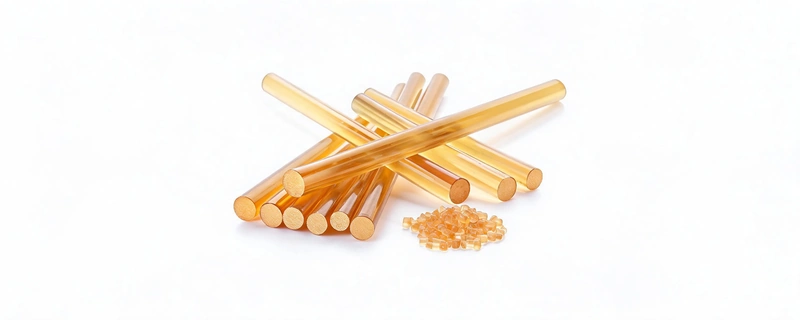
PES rod is a semi-finished round stock made from polyethersulfone, an amorphous high-performance thermoplastic belonging to the sulfone polymer family. Natural PES commonly has a transparent or translucent amber appearance, although its actual color and clarity depend on the grade, diameter and manufacturing process.
PES is valued for its relatively high stiffness, dimensional stability and ability to retain useful mechanical properties at elevated temperatures. Its glass transition temperature is typically around 225°C, although the exact value should be confirmed against the technical data sheet of the selected grade.
PES rods can be supplied in different diameters and lengths for subsequent machining. Manufacturing methods, available dimensions and tolerances vary by supplier and product grade.
2. Key Properties of PES Rod
PES rod is generally selected when a component needs a balance of mechanical strength, thermal resistance and dimensional stability. Important characteristics include:
- Thermal performance: PES retains useful mechanical properties at elevated temperatures. Its suitability for continuous operation depends on the grade, mechanical loading and surrounding environment.
- Hydrolysis resistance: Suitable PES grades offer good resistance to hot water and steam exposure.
- Dimensional stability: Its stiffness and relatively low tendency to deform under suitable conditions make PES useful for precision components.
- Electrical insulation: PES offers useful electrical insulating characteristics for selected electrical and electronic components.
- Transparency: Natural PES may be transparent or translucent amber, allowing visual inspection in some component designs.
- Flame performance: Certain PES grades offer favorable flame performance. Confirm the specific grade's test classification before specifying it.
3. Typical Applications of PES Rod
Medical and Laboratory Equipment
Selected PES grades may be considered for laboratory equipment, instrument components and parts exposed to hot water or steam sterilization processes. Material selection must account for sterilization cycles, cleaning agents, mechanical loads and applicable medical-device requirements.
Fluid Handling Components
PES can be used in selected fluid-handling components, connectors, manifolds and equipment housings where dimensional stability and resistance to hot water are important. Compatibility with the actual fluid must be verified before use.
Electrical and Electronic Components
Its thermal and electrical properties make PES a candidate for selected insulating components, precision supports and parts used in electrical equipment operating at elevated temperatures.
Industrial Precision Parts
PES rod can be machined into bushings, spacers, sleeves, supports and custom components. The suitability of each part depends on its load, friction, temperature and chemical exposure.
4. PES Rod CNC Machining Considerations
PES rod can be processed using conventional plastic machining methods. However, precision machining requires attention to heat generation, residual stress and workpiece support.
- Use sharp cutting tools: Sharp tools help reduce cutting forces, friction and localized heat generation.
- Control machining temperature: Avoid excessive cutting speed or feed conditions that cause overheating or surface damage.
- Support the workpiece properly: Avoid excessive clamping pressure, especially when machining thin walls or small-diameter parts.
- Manage residual stress: For demanding precision parts, consider staged rough machining, stress-relief procedures where appropriate, and a final finishing operation.
- Inspect after machining: Check dimensions, surface finish and potential stress-related cracking after the part has stabilized at the inspection temperature.
5. When Should You Choose PES Rod?
PES rod may be a suitable option when your component requires a combination of:
- Good stiffness and dimensional stability.
- Resistance to hot water and suitable steam exposure.
- Useful mechanical performance at elevated temperatures.
- Electrical insulation in demanding environments.
- A natural amber appearance or visual inspection capability.
It is important to evaluate the complete operating environment rather than selecting a material based on one property alone.
6. PES vs. PSU vs. PPSU Rod
PES, PSU and PPSU belong to the sulfone polymer family. They share some characteristics, but their mechanical, thermal and impact properties are not identical. The right choice depends on the requirements of the finished component.
| Material | General Characteristics | Selection Considerations |
|---|---|---|
| PES | High stiffness, thermal performance and good hydrolysis resistance in suitable grades. | Consider when rigidity and hot-water performance are important. |
| PSU | Good dimensional stability, transparency and hot-water resistance. | Consider for applications requiring a balance of transparency and mechanical performance. |
| PPSU | High impact strength and good resistance to repeated steam exposure in suitable grades. | Consider when toughness and sterilization-cycle performance are important. |
These are general material-selection guidelines, not a substitute for grade-specific testing. Compare technical data sheets and verify chemical compatibility, operating temperature and sterilization requirements before making a final decision.
7. What to Check Before Ordering PES Rod
Before requesting a quotation, prepare the following information to help identify the appropriate material and stock dimensions:
- Diameter: Required rod diameter and dimensional tolerance.
- Length: Standard or custom cut length.
- Material grade: Natural PES or a specified grade.
- Quantity: Required number of rods or total order quantity.
- Application: Operating temperature, loading and chemical exposure.
- Machining requirements: Whether you need raw rod stock or finished CNC components.
- Documentation: Any required technical data, material certificates or application-specific documentation.
If you have a drawing, material specification or existing sample, sharing it with your supplier can make material selection and quotation more accurate.
8. Frequently Asked Questions About PES Rod
1. What is PES rod used for?
PES rod is used to machine precision components such as connectors, bushings, sleeves, spacers, insulating parts and selected fluid-handling components. Its suitability depends on the material grade and actual operating conditions.
2. Is PES rod transparent?
Natural PES is commonly transparent or translucent with an amber tint. The actual appearance depends on the grade, rod diameter, processing method and surface finish.
3. Can PES rod withstand steam sterilization?
Suitable PES grades can offer good resistance to hot water and steam. However, repeated sterilization performance depends on temperature, cycle duration, mechanical stress, cleaning chemicals and the specific grade. Validate the material under the intended sterilization conditions.
4. Is all PES rod medical grade?
No. PES is a polymer family, not an automatic medical-grade designation. Medical applications require confirmation of the specific grade, supplier documentation, applicable regulatory requirements and finished-device validation.
5. Can PES rod be CNC machined?
Yes. PES rod can be machined using suitable turning, milling and drilling processes. Sharp tools, controlled cutting temperatures, proper workpiece support and stress management help achieve reliable results.
6. Is PES more chemical-resistant than PEEK?
Not generally. PEEK often offers broader chemical resistance in many industrial environments, but performance depends on the chemical, concentration, temperature, exposure time and material grade. Check compatibility data for the actual service conditions.
7. What is the difference between PES and PPSU rod?
PES is generally selected for its stiffness, thermal performance and hydrolysis resistance. PPSU is often considered when higher impact toughness and repeated steam exposure are important. The best choice depends on the specific grade and component requirements.
8. What information is needed for a PES rod quotation?
Provide the required diameter, length, quantity, material grade and application. If you need CNC-machined components, include a technical drawing with dimensions and tolerances. This helps the supplier evaluate the material and manufacturing requirements.
Looking for PES Rod Stock?
Teda Plastics supplies engineering plastic semi-finished materials and supports inquiries for PES rod, sheet and custom-machined components. Send us your required dimensions or technical drawing for a material and quotation discussion.
Request a PES Rod Quote