PPA (Polyphthalamide) granules are high-performance polyamide materials used to manufacture precision components through injection molding. As a semi-aromatic polyamide, PPA can offer a useful combination of heat resistance, mechanical strength and dimensional performance compared with many conventional polyamides.
Depending on the formulation, PPA compounds may be unfilled, glass-fiber reinforced, mineral reinforced or modified for specific electrical, thermal, chemical or processing requirements. The correct grade should be selected according to the component design and its actual operating environment.
1. What Are PPA Granules?
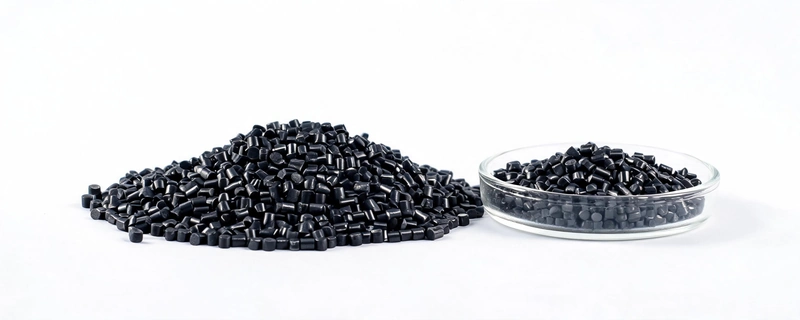
PPA granules are thermoplastic resin pellets designed for melt processing, particularly injection molding. Their semi-aromatic molecular structure helps provide higher heat resistance and stiffness than many standard aliphatic polyamides, although actual performance varies by polymer composition and compound formulation.
Commercial PPA materials are available in different colors and reinforcement systems. Natural and black pellets are common, but color alone does not identify the material composition. A black PPA grade, for example, is not necessarily glass-fiber reinforced or UV-stabilized.
2. Common PPA Granule Grades
Unfilled PPA
Unfilled PPA is generally considered when a component needs a balance of strength, toughness, surface quality and dimensional performance without the additional stiffness and abrasiveness of fiber reinforcement. It may also be useful for designs where reduced anisotropy is important.
Glass-Fiber Reinforced PPA
Glass-fiber reinforced PPA is used when higher stiffness, strength and dimensional control are required. Fiber content and orientation influence shrinkage, warpage, mechanical behavior and the properties measured in different directions.
Mineral-Filled PPA
Mineral-filled grades can be developed to modify stiffness, dimensional behavior, surface characteristics and shrinkage. Their performance depends on the filler type, loading level and overall formulation.
Specialty Modified PPA
Some PPA compounds are formulated for electrical applications, improved impact performance, flame-retardant requirements, lower friction or specific chemical environments. These characteristics should always be verified against the manufacturer's technical data sheet.
3. Key Properties of PPA Granules
PPA is selected for demanding applications where ordinary nylon grades may not provide sufficient thermal or mechanical performance. Important properties to evaluate include:
- Heat resistance: PPA grades can maintain useful mechanical performance at elevated temperatures, subject to grade and load conditions.
- Mechanical strength: Reinforced compounds can provide high stiffness and strength for structural components.
- Dimensional stability: Appropriate grades can help control dimensional changes in precision molded parts.
- Chemical resistance: Resistance to oils, fuels, coolants and other chemicals depends on the specific formulation, concentration, temperature and exposure time.
- Electrical performance: Selected grades are used in connectors and electrical components, with dielectric properties requiring grade-specific verification.
- Moisture behavior: PPA is a polyamide, so moisture absorption and conditioning can influence dimensions and mechanical properties.
4. Typical Applications of PPA Granules
Automotive Components
PPA compounds are used in selected under-hood and powertrain applications, including housings, connectors, sensor components and fluid-handling parts. Suitability depends on the grade's resistance to the actual fuel, oil, coolant, temperature and mechanical loading conditions.
Electrical and Electronic Components
PPA is used in electrical connectors, sockets and other precision components where thermal performance, stiffness and dimensional consistency are important. Some grades are designed for applications involving lead-free soldering processes, but the required temperature profile and component design must be checked.
Industrial Fluid Handling
Selected PPA compounds may be used for pump-related components, housings and other fluid-handling parts. Chemical compatibility should be evaluated under the actual operating temperature and exposure conditions rather than assumed from the material family name.
Precision Engineering Parts
Injection-molded PPA components can be suitable for complex geometries that combine mechanical loading, heat exposure and dimensional requirements. Mold design and process control are important to achieve consistent results.
5. PPA Injection Molding: Important Processing Considerations
PPA injection molding requires careful control of material preparation, melt temperature, mold temperature and cooling conditions. Processing settings are not interchangeable across all PPA grades.
Material Drying
PPA granules should be dried and handled according to the resin manufacturer's recommendations. Moisture can contribute to processing problems, including hydrolytic degradation, surface defects and inconsistent molded-part properties.
Drying temperature, time, airflow and allowable moisture content depend on the specific grade and packaging condition. Use the supplier's technical data sheet rather than applying one generic drying schedule.
Melt and Mold Temperature
PPA is a high-temperature engineering thermoplastic. The appropriate melt temperature and mold temperature depend on polymer composition, reinforcement, part thickness and machine configuration. Temperatures that are too low may cause incomplete filling or poor surface quality, while excessive heat exposure can increase the risk of material degradation.
Machine and Screw Selection
The injection molding machine must provide suitable temperature capability and stable melt delivery. Screw design, residence time, back pressure and injection speed should be adjusted for the selected resin grade and part geometry.
Mold Design and Shrinkage
Gate location, runner design, venting, cooling layout and wall thickness all affect molded-part quality. Glass-fiber orientation can produce directional shrinkage and warpage, so mold design should account for the reinforcement system and flow direction.
6. PPA Granules vs. PPA Sheet and Rod
PPA granules and PPA semi-finished stock serve different manufacturing purposes. Granules are primarily intended for melt processing, while sheet and rod stock may be used for machining when a suitable machinable grade is available.
| Material Form | Typical Manufacturing Route | Common Use |
|---|---|---|
| PPA Granules | Injection molding | Repeat production of complex molded components |
| PPA Sheet | CNC machining, cutting | Custom plates, prototypes and machined components |
| PPA Rod | CNC turning and milling | Custom bushings, spacers and precision parts |
Not every injection molding PPA grade is available as sheet or rod stock. If your project requires CNC machining, confirm the availability and suitability of the actual semi-finished stock grade before finalizing the design.
7. PPA vs. PA66, PPS and PEEK
PPA, PA66, PPS and PEEK are all used in engineering applications, but they serve different performance and cost requirements. The best selection depends on the operating temperature, mechanical loading, chemical exposure, manufacturing process and total component cost.
| Material | General Characteristics | Typical Selection Consideration |
|---|---|---|
| PA66 | Widely used engineering polyamide with good mechanical properties | General engineering components and cost-sensitive applications |
| PPA | Semi-aromatic polyamide with grades designed for elevated-temperature applications | Applications requiring a higher-performance polyamide |
| PPS | High-temperature thermoplastic with strong chemical resistance in many environments | Applications requiring thermal and chemical performance |
| PEEK | High-performance thermoplastic with excellent overall property balance in suitable grades | More demanding applications where performance justifies higher material cost |
These are general material-family comparisons, not guaranteed grade-to-grade rankings. For an engineering decision, compare the specific grades using the same test methods and operating conditions.
8. When Should You Choose PPA Granules?
PPA granules are worth evaluating when a project requires injection-molded components with a combination of thermal performance, stiffness, dimensional control and production repeatability.
- The component is intended for repeated or medium-to-high-volume production.
- The operating environment exceeds the practical limits of a conventional polyamide grade.
- The design requires complex molded geometry or integrated features.
- A suitable reinforced or modified PPA grade can meet the mechanical and environmental requirements.
- The production process can support the required drying, melt-temperature and mold-temperature controls.
For prototypes or small quantities, injection mold tooling costs should be considered carefully. If a suitable PPA sheet or rod grade is commercially available, CNC machining may be an alternative for prototypes and limited production runs.
9. How to Select the Right PPA Grade
Before selecting PPA granules, define the component's actual operating conditions and manufacturing requirements. The following information helps narrow down suitable grades:
- Operating temperature: Continuous temperature, short-term peaks and applied mechanical load.
- Mechanical requirements: Tensile strength, stiffness, impact performance and creep resistance.
- Reinforcement: Unfilled, glass-fiber reinforced, mineral-filled or specialty modified.
- Chemical exposure: Specific fluids, concentrations, temperature and contact duration.
- Electrical requirements: Dielectric performance, insulation resistance and relevant safety requirements.
- Manufacturing process: Part geometry, wall thickness, tooling design and production volume.
- Compliance requirements: Any required automotive, electrical, food-contact or other application-specific approvals.
A clear technical specification makes it easier to compare grades and avoid selecting a resin based only on its generic material name.
10. Frequently Asked Questions About PPA Granules
1. What are PPA granules used for?
PPA granules are mainly used for injection molding engineering components that require a combination of heat resistance, mechanical strength and dimensional performance. Typical applications include selected automotive, electrical and industrial components.
2. Are all PPA granules glass-fiber reinforced?
No. PPA is available in unfilled, glass-fiber reinforced, mineral-filled and specially modified grades. The reinforcement content should be confirmed from the manufacturer's grade designation and technical data sheet.
3. Why are many PPA pellets black?
Black is a common commercial color for certain PPA compounds, but color does not identify the exact formulation. Black pellets are not necessarily glass-fiber reinforced, UV-stabilized or suitable for a particular automotive application.
4. Do PPA granules need to be dried before injection molding?
PPA granules generally require moisture control before processing. The required drying conditions and maximum moisture level depend on the specific resin grade and its storage condition. Follow the manufacturer's processing instructions.
5. What is the injection molding temperature for PPA?
PPA processing temperatures vary with polymer composition, reinforcement and grade. Melt temperature and mold temperature should be selected from the supplier's technical data sheet and adjusted through controlled molding trials.
6. Can PPA granules be used for automotive applications?
Yes. Selected PPA grades are used in automotive connectors, sensor components, housings and other under-hood parts. Compatibility with fuel, oil, coolant, temperature cycling and mechanical loads must be verified for the exact grade.
7. Is PPA better than PA66?
PPA grades are often considered when higher thermal performance or stiffness is required than a conventional PA66 grade can provide. However, the best material depends on the specific grade, cost, moisture conditions, mechanical loading and application requirements.
8. Can PPA granules be used for CNC machining?
Granules are intended for melt processing rather than direct CNC machining. CNC machining requires suitable semi-finished stock, such as PPA sheet or rod, if commercially available. Not every injection molding grade is available in machinable stock form.
Looking for PPA Granules?
Teda Plastics supports material sourcing for engineering plastic applications. Contact us with your required PPA grade, reinforcement type, color, application and estimated quantity so we can review your requirements.
Contact Teda Plastics